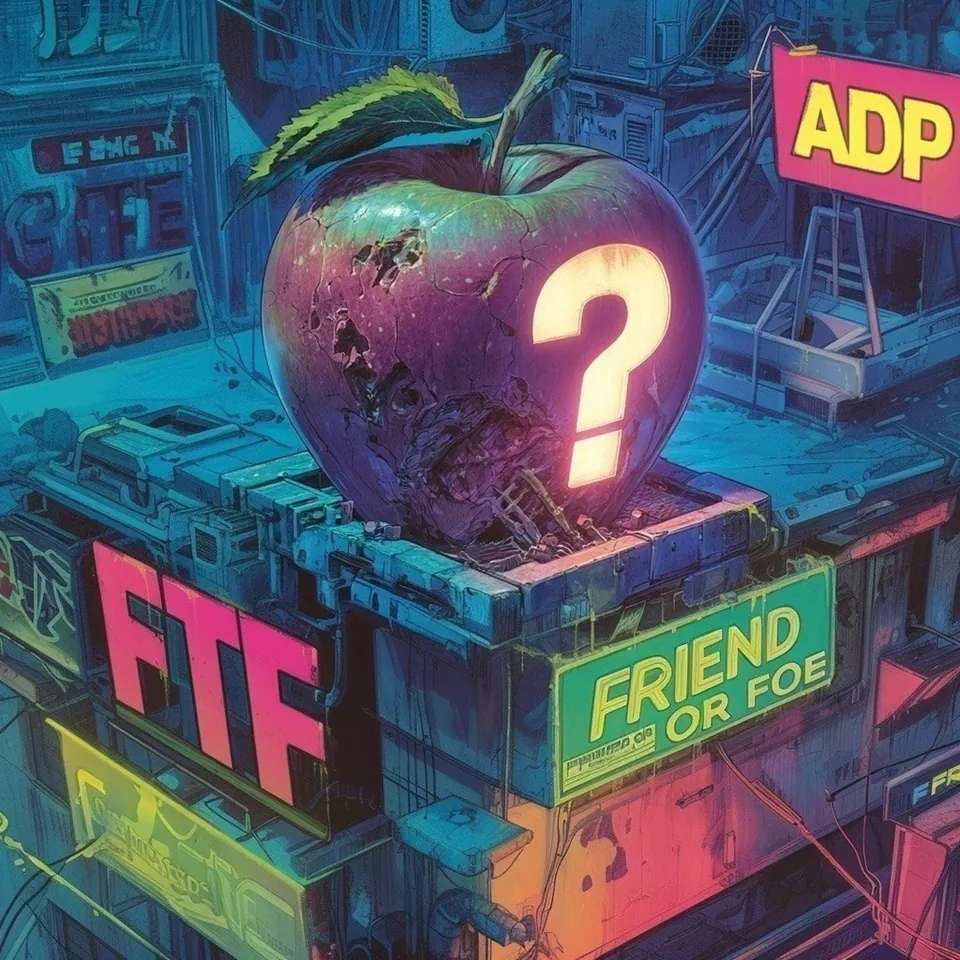
Apple & Privacy: Friend or Foe?
Discussed in this episode
Boost this Episode
Send sats directly to the creators. Value for Value.
Plus 1% to Podcast Index, 1% to Boost Bot.
Show Notes
A weekly live show covering all things Freedom Tech with Max, Q and Seth.
HELP GET SAMOURAI A PARDON
- SIGN THE PETITION ----> https://www.change.org/p/stand-up-for-freedom-pardon-the-innocent-coders-jailed-for-building-privacy-tools
- DONATE TO THE FAMILIES w/ USD ----> https://www.givesendgo.com/billandkeonne
- DONATE TO THE FAMILIES w/ BTC ----> https://pay.zaprite.com/pl_JpxtkLv95T
- SUPPORT ON SOCIAL MEDIA ---> https://billandkeonne.org/
TO DONATE TO ROMAN'S DEFENSE FUND: https://freeromanstorm.com/donate
VALUE FOR VALUE
Thanks for listening you Ungovernable Misfits, we appreciate your continued support and hope you enjoy the shows.
You can support this episode using your time, talent or treasure.
TIME:
- create fountain clips for the show
- create a meetup
- help boost the signal on social media
TALENT:
- create ungovernable misfit inspired art, animation or music
- design or implement some software that can make the podcast better
- use whatever talents you have to make a contribution to the show!
TREASURE:
- BOOST IT OR STREAM SATS on the Podcasting 2.0 apps @ https://podcastapps.com
- DONATE via Monero @ https://xmrchat.com/ungovernable
- BUY SOME STICKERS @ https://ungovernable.network/shop/
FOUNDATION
https://foundation.xyz/ungovernable
Foundation builds Bitcoin-centric tools that empower you to reclaim your digital sovereignty.
As a sovereign computing company, Foundation is the antithesis of today’s tech conglomerates. Returning to cypherpunk principles, they build open source technology that “can’t be evil”.
Thank you Foundation Devices for sponsoring the show!
Use code: Ungovernable for $10 off of your purchase
CAKE WALLET
Cake Wallet is an open-source, non-custodial wallet available on Android, iOS, macOS, and Linux.
Features:
- Built-in Exchange: Swap easily between Bitcoin and Monero.
- User-Friendly: Simple interface for all users.
Monero Users:
- Batch Transactions: Send multiple payments at once.
- Faster Syncing: Optimized syncing via specified restore heights
- Proxy Support: Enhance privacy with proxy node options.
Bitcoin Users:
- Coin Control: Manage your transactions effectively.
- Silent Payments: Static bitcoin addresses
- Batch Transactions: Streamline your payment process.
Thank you Cake Wallet for sponsoring the show!
MYNYMBOX
Your go-to for anonymous server hosting solutions, featuring: virtual private & dedicated servers, domain registration and DNS parking. We don't require any of your personal information, and you can purchase using Bitcoin, Lightning, Monero and many other cryptos.
Explore benefits such as No KYC, complete privacy & security, and human support.
Hello, and welcome back to Freedom Tech Friday, a weekly live and interactive show hosted on the Ungovernable Misfits x, Nosta, YouTube Rumble, and Twitch feeds. We go live for one hour every Friday at 9AM eastern at 2PM UK time, but you can also catch it later on the Ungovernable Misfits podcast feed.
On Freedom Tech Friday, we like to cover the latest news, trends, and topics for anything relating to Freedom Technologies. That could be anything from Bitcoin and Monero, encrypted messengers, privacy tools, and everything in between.
Essentially, if there's a news item tool or topic that we can help you that can help you take back some control in today's digital Panopticon, we wanna talk about it. My name is Q and A, and I am head of customer experience at Foundation where we build Bitcoin focused sovereignty tools.
As always, I am joined by my good friends Max, the head honcho of the ungovernable Misfits Empire, and Seth who is COO at Cakewallet. This is a live and interactive show, and you can help steer the conversation by commenting live, pre submitting your questions or topics on socials,
boosting the show via podcasting two point o apps, or sending tips, or just sharing the show with your friends. Top support for the last show about our FreedomTech plans for 2026 comes from late stage Huddl, who sent 6,006
sats and said, keep up the good work, boys. Max and Q need to burn some bonds. We very much have been doing that. That's why we weren't here last week. Apparently, they aren't working hard enough.
Although Max's explanation of his plumbing work sounds like a cartoon where you plug a hole and another leak begins in another way. It is a bit like that. Thank you for your support as always, late stage huddle.
Yeah. So without further ado, I've seen you both hopping in and out. I don't know whether you're trying to troll me or whether this is a problem with the stream, but welcome back again. Seth, how's it going?
I am here. Apologies for the high quality, terribly nasal sicko Seth morning, but consider it a privacy related voice masking. So Oh. Y'all get to enjoy that. Maybe q q and Max can strip out my voice and give you just the just the Max and Q experience on the recording to to spare your ears. But, yeah, I'm here. I'm here.
And, yeah, the the stream was, like, forcibly removing me from it over and over again just in the start of my browser. It was very weird. Never seen that happen before. Let's hope that does not persist because
I don't wanna carry this shit on my own. I need to to lean on you guys. How about you, Matt? Are you are you well? Are you sick? Are you stressed? Are you No. No. Plumbing? Sort of a little bit of everything, but nothing too much. Pretty happy.
Very bullish at the moment on the markets and everything, so that's all looking good. Are you looking at the upside down You gotta turn your computer upside. The right side up. Right side up. I I don't usually care, but I had some
some materials to buy, like, quite a lot of materials to buy, and everything's got a bit more expensive. But other than that, very, very good. Very happy. Thank you. And looking forward to learning about the topic we got today.
Yeah. Yeah. Glad to hear it. Before before we dive in, a couple of housekeeping stuff. Obviously, we we weren't here last week, so apologies to the diehards. We Yeah. We just couldn't make it work.
Max was was washing his hair. Seth had to brush his dog, and I was busy. No. I'm joking. It was just like chaotic
schedules predominantly driven by me. So you can you can all blame me, folks. But Yeah. Will. We we're back. We're back. We're not gonna make a habit of it. And I did I did genuinely miss doing the show. It was a it was a shame. I went I went into the weekend on a downer.
Yeah. It does. It's a nice way to end the week, I think.
It is. It is. Hello to to Nostagang in the Nostagang chat, of course. And also hello to Matt Baker, that says, hey, guys. Tell us more about the forklift racing thing you spoke about last week. Ridiculous.
What a good idea. Also, I'm a forklift engineer. Well well, there you go, Matt. If you could be a forklift engineer slash race technician or something like that, if you wanna Mhmm. You know, get your hands dirty into forklift racing.
We I'm not sure we we should be able to it. I I think yeah. Well, I was a little bit confused by Matt's comment, but it won't we This was on the brief. Brief. Yeah. I thought brief. So do you wanna give give Seth the the of of TLDR, Max? So I I pitched to q and a because he was talking about motorsport and doing,
like, an ungovernable motorsport thing. I said, well, we're a bit too poor to do that, all of us, to do proper motorsport because it's fucking expensive. What about forklift racing and doing it across, like, different stages?
So you have park racing, then you've got something where you've gotta pick up something that's very awkward, move it somewhere, place it somewhere, then you gotta do the next stage and do it very, like like, greasy and dirty and, like, the opposite of f one that you have to drink a beer out of the can. You have to be smoking a cigarette.
Ideally, when you go around a corner, like, if you could spit, that'd be perfection. And just really bring it down a couple of pegs, and and that can be the ungovernable racing. And I thought this was brilliant, and Q informed me this is already a thing in Germany. It's already a thing.
Yeah. Yeah. But they tune them up to a thousand horsepower. And, yeah, it's it's absolutely fucking mental. So I don't know. It's something to aspire to.
So y'all both already own forklifts? Or am I I I'm not I feel like I'm missing out here. I wish I had a useful one because I I I like the idea of of just having a forklift and and needing one, unfortunately, I do not.
I've spent a lot of time on them, and I love them. I don't have one at home because, again, I haven't got a use at home, but I've got access to them. And they're just fun. And so are telehandlers and all like, anything big,
anything like that is just as fun as it seems when you were a kid. Like, when you're a little boy, you're like, oh, fucking. I want a tractor or a combine. It's fun.
Yeah. And, look on the bright side. If the market keeps going away, at least we've got another option other than McDonald's now. We can we can There you go. Yeah. It'll be our other career.
Quit podcasting, pick up forklift racing. I might do that. Anyway,
as always, we have digressed. But today, we are going to talk about probably quite a big elephant in the room, Apple. I don't think that anybody can dispute the fact that they make some incredible hardware and also some software that's difficult to ignore, particularly in in 2026.
But today, we wanna ask the question, you know, is the grass actually greener? We all know that Apple comes with trade offs, and we're gonna dive into some of those. And is it worth throwing yourself into the walled garden just so you can have all the nice shiny things that just work TM.
In the early days, Apple built their entire brand around privacy. They had billboards, TV ads. And I think one of the quotes was what happens on your iPhone stays on your iPhone. Not sure whether that's still the case, but maybe we can dive into that today.
But in the Freedom Tech community, Apple often gets dismissed as no better than or being no better than Google. So today, we're gonna ask, you know, is that fair, or are we letting perfect be the enemy of good?
For millions of people, probably tens, if not hundreds of millions of people, the iPhone is, like, the only default choice, particularly in the in the Western world.
And something like a switch to graphene OS, like Android, seems outside of the realms of possibility because people find themselves so entrenched. So the real question is, can a properly configured iPhone provide meaningful privacy, or is it all kinda just theater?
As always, I'm sure the answer lies somewhere in the middle, but that's the point of today's conversation where we're gonna dive into that. But,
obviously, I'm not gonna answer this alone. Before we get into it, I've got to ask, gents, and be honest, do either of you own or use have use of an iPhone even as a secondary device? I promise there will be no judgment from me.
I can confess. Yes. I use a lot of Apple products along with other devices, but, yes, very happy Apple user.
This isn't it's not we're not live. This isn't being recorded or anything. Right? No. No. No. No. Don't worry about it, mate. Tell Just the three of us. Just between the three of us. You'll still be a cypher punk. Don't worry, mate. Exactly. Yeah. If we can we can clip this out at the end.
Yeah. I mean, I definitely used to be a hardcore anti Apple person after having been an Apple person for a while. They're pretty ubiquitous, especially in the, like, the cybersecurity world. So I had gotten into the ecosystem, bailed on them when I started my privacy journey.
But I actually primarily use an iPhone now and a Mac, which is painful to say. I know we'll get into a lot of the the tuning and caveats and things to keep in mind, but there are definitely pros and cons.
And I I I am an iPhone guy now. That's not exclusive. I also have a GraphiteOS phone that I use heavily for different things, but I I do primarily use an iPhone now, which is, I know, scary. Gonna ruin my reputation out here.
Set for surveillance. Exactly. Exactly. Yep. Yeah. And just to round out the the three of us. Yeah. It it's an iPhone has slowly wormed its way into my life in the past twelve months. I had one for work, also use a Mac for work. And once you kind of
start getting those little hits of dopamine when things, you know, you get Once the go back, you never go back. The the ecosystem dopamine hits where you're like, oh my god, sending from devices or sharing shit or headphones just work.
It's I I finding myself leaning more and more into it and it rather than it just becoming a dedicated work device, like more of my own apps are creeping in. So, yes, I am also a self confessed Apple user, so strike me down. But anyway, before we start or continue criticizing, I think it's worth giving credit where it's due.
Apple, for all its faults, has actually shipped some features that have cost the surveillance industry real money, I guess. They're not just kind of marketing claims. Some of it actually works, TM, that's that quote again. So let's start positive. Like, what what's the one thing or one Apple privacy feature?
Doesn't have to just necessarily be iPhone. It could just be the Apple ecosystem because they are also kind of closely knit these days. That is, you know, genuinely good. Like, we all know they've done some good stuff, but, like, what springs to mind when you when you talk about it that you think, you know what? Actually, fair play.
Man, I would say the the tracking is quite a big one. You like being tracked? How easy yeah. I like being tracked. It's creepy, but it does things to me. No. I think I think it's just how easy it is to go through settings and and how you are actually asked if you wanna be tracked is an important one because most people
won't go through settings and won't try and optimize optimize for for privacy. They're more on the other scale where they're optimizing to make things as easy and synced and simple as possible.
But when you actually are asked, like, do you want this app to track you? You're like, do I wanna be tracked by this app? No. I actually don't. And and it's so easy just to press no. There's no reason that you would press yes. Yeah. I do wanna be tracked. So I think that's probably the biggest.
Yeah. I love that that devs can put a custom message in there for, like, why they wanna track you. It always gives me a chuckle when I I read those, like that. Not most people don't do it, but you'll get some apps that tell you, like,
this is what we'd love to provide for you if you if you will allow this, basically, like, on their hands and knees begging for you to allow them to track you. I just I think it's hilarious. And I I I mean,
I think there's a lot of things I could point to, but definitely seconding that one that you mentioned, Max, of, like, every user getting that prompt of do I wanna be tracked. Not only, obviously, it's good for that app specifically that users can easily say no.
And I think from what I've seen, most users do say no that they don't wanna be tracked shockingly. But it also just makes privacy front and center for people who maybe aren't thinking about it. Like, I think a lot of people, you just install an app and you don't think about
will this app actually track what I do. But it makes you think with every app you install, okay. This one doesn't want to track me. They also have good stuff in the the App Store that tells you kinda what what data they're gonna try to collect if you allow it. But
I do definitely love that. I mean, the I think there's a lot of things I could point to here, but I'll leave advanced data protection for us to to try to put a little more later. I think that's the the, by far, the biggest one, but the the other really cool one that I think doesn't get enough credit is the iCloud plus private relay,
which is basically like a dual hop VPN that you just get by default if you have iCloud plus and enable it super easy. You don't get a lot of the VPN headaches that you can get from traditional VPNs, but you get really good privacy from the sites and services that you're using.
And in a very Apple way, it just just works. And, like, I've enabled it for friends and family, and they don't ever have any problems with it. And they get better privacy as a result. And that one, if you talk to people, like, in the VPN industry, like, I've talked to
Carl, the the founder of Obscura, like, a lot of the stuff that they've done from an engineering perspective there is very novel and very, very good.
Of course, not open source. It's hard to verify a of the claims, which I'm sure we'll get into as well. But that's another one of those kinda, like, easy privacy wins that doesn't really help Apple, but helps you.
Yeah. They're they're two really good callouts. The the pop up where you get about the app tracking, I like to think of that as, like, the reverse of, like, website cookies
where it's, like, you go to we're we're also conditioned now that you go to websites and you have to, like, click through three or four pop ups to get the website website to work and just, like, not be annoyed. And people have just, like they've kind of conditioned themselves as just, like,
be ready to click through a load of things that they're never ever gonna read
just to be able to use a specific website. Whereas, like, the the privacy thing is, like, is, like, the reverse of that where it's like, oh, hang on. It's simply yes or no button. Do I wanna be tracked? Like, it's it's quite a binary question. It's it's very easy to say no and make them think in a positive way about their privacy.
And it's like, yeah, I I I definitely commend them for that one. And I the these are all things, I guess, that kind of graphene OS users, like, kind of take for granted that are, like, off by default because of the way that it's built. But having it surfaced in such a way that's easy to
protect your privacy with a single tap on an app by app basis, or I believe you can just turn it off so the apps are not even able to ask the question like a blanket ban, I think, definitely a positive one.
The other one Yeah. I wanted to Go, Mac. Sorry. Go. I was just gonna say, over the last couple of days, I've been spending some time with family members, like, mainly boomer types, very, like, nontechy, sort of a couple of years ago would never ever bring up privacy.
And at least two of them have sat down with me and been like, how do I run a VPN? Like, I do need one, don't I? Like, how do I do this? Like, which one's the best one? And they're actually coming to me asking me for things like that.
And I think that that is a big part of, like, the whole shift in people's thoughts with everything to do with privacy, just like generally lack of trust in governments and and these large corporations.
And then these type of things where it's like bringing to the forefront
that you are being tracked. It's just bringing it into their face. Like, you are being tracked unless you press no. I don't want to. And all the other apps that you haven't done this with will be tracking you. And I just thought that was interesting because they're people I've tried to,
like, annoy about privacy and Bitcoin and all this stuff for, like, nearly a decade, and they're bringing it up now. So I don't know whether that's linked. I don't know. But it's just an interesting data point.
Yeah. Yeah. Definitely. The the last one I wanna commend them for is the hide my email, once again, in true Apple style. Oh, yeah. For people that don't use things like, you know, Proton aliases or or Tutor aliases or anything any of the other, like, services where you have to go and configure it yourself.
Like, it's literally a a keyboard tap on an iPhone now that when you're signing up for a service, it will say, you hide my email.
And that, again, is a you know, is only a positive thing for somebody who doesn't have, you know, the the the will or desire to go to any of these third party services to set that up to get the privacy. They can still get that and just have everything auto forwarded to their, you know, max@icloud.com
or whatever their Apple email address is. So, again, I I I think they did a really good job there in true in true Apple style. Alright. Time to do some hating. Apple, as we've just established, they do do some genuinely good stuff, and and what they're very good at is
making it intuitive and simple so that you don't have to, you know, leverage third party services. But I don't want us to get too carried away. There are obviously some serious problems that the the marketing, I guess, conveniently leaves out.
So I guess, gloves off, what's the the Apple privacy failure that that bothers you the most? I'm sure there's probably many. So let's start with the obvious and the big ones. I'll hand it to you first, Max.
I I think just that a lot of it is just trust me, bro. That's the big one. It's like, it's all good in theory, but it's closed source. You can't actually know. Obviously, it'd be terrible for their reputation if it ever came out that what they were saying isn't true, but also
it would probably be terrible for their business if they didn't scratch the backs of and tickle the balls of people above them. So I that's my biggest one is, like, I would never do anything with an Apple device that is life or death, that is, like, extremely important to me.
I would do most things. Define define you know, give us some examples. Anything to do with information that would be a problem if it got out, anything to do with, like, Bitcoin transactions,
like, more personal stuff that can be linked to me, anything to do with, like, finance or just stuff that, like, people could then trace me with or that kind of that kind of stuff, I think. Like, I would never do any Bitcoin stuff on an Apple device personally. I just don't do it. I I separate things out because I just don't
trust it enough.
Yeah. I mean, I've gotta say that this is the the big one for me is that it's it's it's the black box effect. Right? Like, it's they have all these awesome promises, awesome features like ADP, which we're gonna get onto in a minute.
But it's just like you just cannot verify the claims, and it is like you say, quote, trust me, bro. Now I probably don't have a reason to believe that they are falsifying their claims.
I believe that they were probably setting themselves up for one of the biggest lawsuits of all time if they were and they got found out. But that's not to say that people haven't lied in the past and very big companies haven't lied in the past. So it's
it's always just that niggle that's in the back of my head. Again, similar to you, Max, that makes me second guess, you know, how much information or how much of my life I'm willing to to put into this kind of
this ecosystem. Like, for for my work stuff, like, that's 99% public anyway, I'm like, yeah. So what who cares? I just want the convenience, but, like, there are certain limits. But, Seth, what about you?
Yeah. I mean, I think for me, the biggest problem I have with Apple is that they have really good stuff available, and we've touched on a lot of it. Advanced data protection is another really good example.
But almost all of it is off by default. Like, one of the really powerful things with GrapheneOS is you just install it, and you're getting almost always the best privacy and security you could get. And then you have to disable some of that if you want more compatibility with things or if you want to install the
Google Play services, stuff like that. You you can kind of go you go from the opposite end of defaults. Whereas Apple, they do do a few things by default. Like, we talked about the app tracking. That that pop up is something that every user will get even if they don't enable something
in settings. But, like, a lot of the iCloud plus stuff is something you have to enable once you've subscribed to iCloud plus. ADP is never enabled by default and isn't it's not, like,
pushed to use. Like, the the one thing that will is the iCloud plus stuff. Like, the there's a clear place for that when you're looking at your iCloud plus subscription, and it'll explain what the things are.
And that that stuff's much better, but ADP is pretty hidden, and it's just like a weird button at the bottom of a settings page that doesn't tell you what it does until you click on it. So I think that's the biggest problem for me. And, obviously, closed source does matter,
but we also have a lot of good evidence that they do actually like, their technology actually does work. An example of that is The UK wanted them to put in a backdoor, and they said we'd rather just not have it supported in The UK, which I think we can
quibble over whether that was the right move or not, but it it does show that they aren't willing to put in a backdoor for just any government, which is encouraging. And the same goes for a lot of the the default into an encrypted iCloud stuff that they haven't
given over to law enforcement in case that that has hap that have happened in the past or unencrypting an iPhone locally like they could have in the past as well.
Stuff like that. So there is some good evidence that they are sticking by the stuff that they build, but we never like something that I mean, it's it's not Freedom Tech if you can't verify anything, much less if you don't have full control over that thing.
So, yeah, it's it's I think that's the the biggest downside, but I definitely I also just wish they would turn a lot more of this stuff on by default. Even ADP, like, I think that they could really do that as a onboarding thing, offer that to users, and use social recovery, which is one of the options of ADP
to enable that without having to do this long string backup kinda thing. It'd be nice it'd be nice just thinking about the setup of an iPhone if you could have maybe, like, three different levels. Like,
you know, if you're saying, like, an iPhone is generally set up to not be private and, like, the settings are not how we might want it, but it's probably a lot easier to use and just works better. And then graphene is, like, very much the other side. It's everything's kind of on by default.
Maybe there could be a way where it's, like, three different options when you're setting it up. Like, do you want extreme privacy,
middle road, or don't care at all kind of thing? Because when you start taking things to the extreme like, I went through all my settings a while ago, and I was, like, check you know, turning everything off. And then I was meant to be somewhere. I was like, oh, you're meant be there at 11:00. Why are you an hour late?
I'm not I'm not an hour late. It's fucking 10:00. And they're like, no. It's not. Look. And it's because I've turned some setting off so that it couldn't track me. So my my
phone didn't know what time it was. And then I get into my car, and I'm trying to drive, and I can't actually connect to Google Maps because I don't have that on. So then you start scaling things back a little bit.
And if it was all out the box, the most private you could be, I think most people would get the phone and be like, oh, this is shit. I'm gonna buy something else, and then they'd lose money.
Yeah. I to to Jordan, to your comment, yeah, I'm trying to fix the the the chat. We can see it on the back end, or I can at least, but it seems that it's not coming through on the broadcast. So apologies, guys. If if you are commenting on Twitter or YouTube or anything, we will see it. I'm trying to put them up on screen, but
it doesn't seem to be working today, so I'm not sure why. But we we will see it if you have questions or comments. There's one here from Thundercross nineteen eighty one on YouTube that says Apple stuff is for pretentious wankers.
My brother bought a new phone and then had to buy a new desktop because it wasn't compatible. Not sure on the details there, obviously, but seems a strange one. I'm guessing they might have had a have had a very old macOS version on their desktop or something.
Who knows? But yeah. And then Jordan also said, after taking xPatriotic's advice and installing Manjaro, I might go full Apple now. So it sounds like he's had a bit of fun there. Linux is probably the greatest contributor to people going full Apple, I would say.
It's definitely it was part of my journey was being Linux only for a few years and flipping tables enough times. I was like, okay. I just need to use a Mac for for work. Again, I'm not using it for personal stuff generally, but for work.
Vibrant, I've seen your question. I'm gonna bring it up towards the end just so so we don't go too off topic, but thank you for for posting. Alright. So we we've established that they do some good stuff, they do some bad stuff, and they but clearly,
there are millions upon millions of people that are okay with whatever trade offs or well, they're either okay with them or they just are not aware of them. So for those millions and millions of people who are gonna run an iPhone regardless of the trade offs, what tips and
tricks can we give them to actually, you know, make the best of I don't wanna say a bad situation because, like, it's a flagship phone at the end of the day. But, you know, a properly configured iPhone,
in my opinion, is probably gonna be better than a poorly configured Android from a privacy perspective. Obviously, I don't include GrapheneOS in that. So if someone handed you their iPhone and said, you know, I've got five, ten minutes, you know, help me make this more private.
What are you gonna do? What what's the first tips you're gonna give them or help them install? Seth, hand it to you first. Yeah. I think the the two big ones that I would harp on, one would be the iCloud plus stuff that we've already talked about.
Apple has a lot of really good, like, family plans that you can just add anyone to. It doesn't have to be family members for this stuff. So if you use iCloud for a good bit of stuff, specifically if you use ADP so that you can use it in a into an encrypted way for most things,
You can do an iCloud plus plan, do it for family, and then add, like, close friends or family to it. And they can get the private relay. They can get all of the HiFi email. They can get all those things that that we've discussed. And those things are just like a one tap enable in the iCloud settings, in the settings app. Sorry.
Just to cut in there, because I've I've haven't actually messed around with with iCloud plus. I obviously, I'm not I'm not paid for it. I I've already got hide my email functionality, that so doesn't seem like a paid benefit. So other than the the VPN, what else does iCloud plus get you? I'm guessing, obviously, extra storage.
Am I wrong? I thought that stuff was iCloud plus. I don't require anything to Apple. Pay for no. I I don't either. Oh, but do you do you have an up upgraded amount of storage? Because that's paying to them, isn't it? Maybe you get it lumped in if you do that or something.
Good question. Off the top of my head, I don't know. I I don't remember seeing any big bills going out of my bank to to Apple. Yeah. You never know. No. I I just confirmed. ICloud plus is required for private relay and for hide my email.
Interesting. Yeah. So you you might see amounts out on my bank account. Yeah. Yeah. I mean, maybe you've just paid for some other iCloud thing. And it's all bundled in. As a part of that. But, yeah, even Apple's own iCloud user guide says that says that that's what you get with iCloud plus premium features.
Says you get a custom email domain as well. I didn't know about that. Is that something you use, Seth? I did not know about that. I just saw that here too, and I'm like, wait. I can use a custom domain name? I mean, one thing I I wanna clarify for people too, you don't have to do, like, an icloud.com email or even a custom domain name.
You can just use your own email address with an Apple account. Like, I use a Proton one. I intentionally I intentionally don't use an alias, but I use a different address from my Proton. You don't have to use an icloud.com one. I don't like, personally, I probably wouldn't use my own domain with Apple.
Mhmm. But, yeah, that's an interesting again, one that I just did not did not know about. There's a few things in here that I didn't know about. But Yeah. Interesting. I'll to look into that before.
So what else? So we we've done iCoplush. You you also mentioned ADP. That that's gonna be a big one. Think let's let's dive into that. Yeah. For sure. So I can unpack that a little bit. So Apple has this functionality that they launched a few years ago called advanced data protection.
It sounds a little scary. All it actually is is that instead of putting your private keys for your encrypted data on Apple servers, which is the default for iCloud. It's not for all data. There is a lot of data that's actually into encrypted even without enabling ADP.
But for, like, all of your iCloud stuff, your message backups, all of that sort of thing. By default, all those things are stored on Apple servers encrypted, but with Apple's encryption keys.
ADP flips that on its head, and you get your own encryption key. So the vast majority of data on your phone or using Apple services or being stored in iCloud gets encrypted end to end with your keys. So even Apple themselves cannot access that data no matter what.
That is a huge shift in the privacy provided by Apple. And really, ADP is the only thing that makes me okay with using Apple. If they did not have ADP, I would not I would not be using Apple primarily, but the fact that I can have the vast majority of my stuff, and I'll get into the caveats
in a second, encrypted by default means that it's it's actually reasonably good overall, and it's very simple to do. For those of you who use Bitcoin, you're used to backing up a a long string of characters. Basically, when you enable ADP, you can do two things. You can either back it up using a recovery key,
which is just a string of characters, which you can stamp on steel. You can use a bunch of different, like, normal Bitcoin backup techniques to save that. Or you can do essentially social recovery.
So you can you can add people as recovery contacts, and those recovery contacts can help you to get back into your account if you get locked out. Obviously, the recovery key is going to be the safest generally because you're not reliant on someone else's account security for your account security.
But one thing that I really like about the social recovery is I've been able to, with their permission, but enable ADP for friends and family and for my wife and others. It doesn't actually impact any of the usability of their Apple account,
but then just do social recovery with myself or with someone else, like their spouse or something. And they get just really good Internet encryption for the vast majority of their data in the Apple ecosystem with no real hit to usability, which is, an impressive feat that Apple's pulled off.
I have a question there, Seth. What what about if somebody hasn't used ADP, they're running as a normal person would, and then they start using it. What happens to all the data, you know, their iCloud photos, their whatever else they're sharing with iCloud?
Does that now get removed or, like, no longer accessible, or is what has already been accessible using Apple's keys still always going to be accessible with Apple's keys? I'm not 100% sure. I mean, one thing that I would assume is if you haven't used it in the past and you start enabling it,
your your your data may have been seen and looked at before that point. Obviously, it shouldn't have been, but it could have been. So I would kind of assume that it's been seen. But my understanding is when you enable ADP, everything gets reencrypted.
Basically, the encryption key gets changed to your new self owned encryption key for the things that get encrypted. Mhmm. So from that point forward, you should be good. But it's the same as, like, if you had posted your photos in Google Drive, and then you delete them and you start using Inte or something,
yeah, that's great, but Google could have been looking at them the whole time. So you should kind of assume that they're compromised, but that same data does get reencrypted using those new encryption keys is my understanding for that.
Okay. Alright. So assume it's been seen, but for things like family photos and stuff, you would hope that now going forward, those would not be viewable in the future even if they were taken years prior.
Yeah. And the the like, one of the important caveats that people should understand is, like, let's say you use
sorry. Hacking up along. Let's say you use iCloud photos or whatever it's called, Apple photos, and you have a shared album with people, you enable ADP that all the photos in the album do not get encrypted using ADP. They don't get encrypted with your private key because they need to be shared between all those users.
So anything that you share throughout the Apple ecosystem, and I think photos is probably the most important for people to understand, you don't get the benefits of ADP unless those people are also using ADP.
This is really easy with, like, your spouse. Like, my wife and I, a a really nice part of Apple Photos is we can just perf we can just instantly share all of our photos with each other the moment they're taken.
And that's really nice. But to get the benefits of ADP, also had to get her set up on ADP. But like I mentioned, it's super easy. You can do social recovery. She has no idea what ADP is,
and it doesn't affect her usage of her iPhone at all. So it's it's one of those things that does work very well, but you do have to know that caveat. If you're sharing photos with a lot of people and they're not using ADP, those photos are not in encrypted. The same goes with notes and other things that generally would be in encrypted,
but once you share them, they basically get unencrypted or rather encrypted with Apple's keys instead of your own so that they can be shared.
With a I mean, don't get me wrong. ADP sounds wonderful. Obviously, as a the the only remaining Brit on the ungovernable team, I do not have access to it, unfortunately. So I have to make alternative arrangements, shall we say. But there
are some stuff like, ADP is not a silver bullet. Right, Seth? There there are some stuff that it doesn't include. So just so people are aware that it's not like it's great, but it's not it doesn't encrypt literally everything associated with your your iCloud account. Right?
Yeah. It's like I mentioned, it's the vast majority. There's a a a list a short list of things that aren't, but the most important things are the shared content losing Internet encryption like I mentioned. And then contacts and calendars
are the two that I made the mistake of assuming were Internet encrypted with ADP, and I actually learned from Tux, one of my coworkers, that it's not Internet encrypted. So I started using something else for contacts.
I already wasn't using Apple's calendar at all, so I didn't have a problem there. But for contacts, I was using that and wrongly assumed that it was in an encrypted. Again, that maybe that doesn't matter for you in theory that those things are still encrypted but to Apple's keys so Apple can see those contacts. But
that was, like, the one caveat that I was very surprised by. I had just expected contacts to be a part of the the ADP into encryption, and it was not. There are a few other things, but those are the the, I think, the most important things for people to know of.
Yeah. Because things like shared calendars and stuff like that for family, if everyone's using Apple, is actually really, really useful. So it would be nice if that was possible.
Yeah. Definitely. But, I mean, that's, like, that's where you can use another service like Proton. Yeah. You can share share calendars between Proton users, and it works quite well. But, yeah, that is a surprising one.
Yeah. Agreed. We do have a a couple of tips come through. We've got Lake Surfer on Nostice sent through 5,000 sets. Thank you for your support. We've also I didn't even know we had this set up, but apparently, do.
XMR chat XMR enthusiasts has sent through 003 XMR via it looks like it's notified us by Twitch. But yeah. Strange. But thank you for your support, nonetheless. I I don't know. Didn't know we had that set up. What that sounds like a Jordan thing. So thank you very much, Jordan, for for helping us get that. And We've running
go on. I was I was just gonna say we've we've set it up so that the last episode that went live of me reading Keanu's first letter, a 100% pass through goes to them. So we've also had nearly 500,000 sats on the last episode so far.
We're gonna try and get it up to a million. So anyone who hasn't listened, go there, 100% pass through, and get them some stats, please. Nice. Nice. We had a a quick question while we're talking about ADP from, I believe, it was Kiffy Boy. I'm just trying to find it now.
He was asking, oh, yeah. Isn't Apple's ADP advanced data protection the same as Google's advanced protection program? I don't have the full details, but my understanding is that as Seth has just kind of, you know, outlined for us really nicely, is that ADP from Apple is more around kind of end to end encrypting your your data
associated with your iCloud account. Whereas Google's APP, advanced protection program, is more around just locking down access to your Google account with I think you have to use, like, a physical
security key to kind of lock down access to your Google services. I don't think it has a focus on, like, end to end encryption for your personal data within your Google kind of product suite.
Feel free to correct me if you disagree there, Max or Seth. No. You're right. The the naming is really confusing. Apple or Apple's version of Google's advanced protection program is called LockDown Mode, and it's a very different thing. It's basically a a tool for
high profile individuals, journalists, activists, etcetera, who are concerned about being targeted with, like, zero day malware that's never been seen anywhere else. So it locks down a lot of functionality, and it will absolutely harm the usability of your phone, both on Android and iOS.
But it can be good for those individuals that that absolutely need it.
Yeah. It's called lockdown mode on Apple or advanced protection program on Google, but neither of those have to do have anything to do with end end encryption. They have to do with what, basically, what functionality is available on your phone and how they handle things like attachments and iMessage, that sort of thing.
Keith, your boys just commented, oh, that makes sense, especially if The UK still allows it. Obviously, referring to the to the Google thing. Basically saying it's useless, so the we're allowed to have it in The UK.
I like that. Jordan has has asked the question, does it make sense to roll with a Pixel and use a MacBook? I mean, yes. But I guess it comes down to kind of what you need from both devices. Like, if you're,
you know, using your MacBook for work and, you you know, you've you're doing may mainly, like, web based stuff or stuff that, you know, the Mac or Apple ecosystem excels in. Sure.
And I guess when you say Pixel, you're you're referring to using a pixel running graphene knowing you, Jordan. Yeah. Yeah. I would say, yeah, like, because you you're gonna be running 80 to 90% of your life on your phone. That's where you're gonna have most of the the privacy critical stuff, I'll say. So having that on a more hardened
operating system like like Graphene, if you're okay with the, you know, the usability trade off of that versus an iPhone and that not being able to kind of link in a much more seamless way to your to your MacBook, which you, you know, spend the other 20% of your time on, then, yeah, absolutely.
We're very much a mobile first society these days. So if you can make that work and you you don't find that the hurdles of getting, you know, the the the lack of sync or, I guess, the lack of magic that you get when you have an iPhone and a MacBook or or or a Mac OS device,
then, yeah, go for it. Like, by all means, like, I did that for quite a long time. And I still have a Magic. Fucking pixel. Yeah.
Magic when it works. But, actually, I find often things like the sharing and stuff don't work even when I'm updated across all devices and stuff like that. And so if you can put up with the headaches, I would say that, yeah, graphene OS on a Pixel and a MacBook is way better, especially if you're using
what am I trying to say? What's the mail service that we all talk about all the time and use? Proton. Proton. If you're using, like, Proton storage and calendars and stuff and you you have that on both devices Mhmm.
That is better. I mean, because at least you know, at least it's open source and you know what's happening and you are more protected. It's just it's just slightly less usable. Only Macs would ruin the a
l e oh, the Apple magic. Yeah. I know. Well, there must be other people who listen to this who are, like, try to do stuff and share photos and stuff, it just doesn't fucking work. Am I the only one? An iPhone to a Mac?
Yeah. IPhone to a Mac using whatever they call it, Apple magic. AirDrop. Stuff sharing. AirDrop. Fucking doesn't work half the time. It drives me mad. So I end up using Telegram to share things.
It's fucking ridiculous. Such a max thing to do. Do you have a router that has multiple,
like, guest networks and stuff like that? My guess is the only time I ever have issues is if I'm not on the same network. I'm like, my phone's on a sub on a guest network or something like that. If they're on the same Wi Fi network, then it is you you do get all of the the dopamine hits when it just works.
Okay. Well, I don't. I don't, but that is me. So there we are. We had a question earlier on from from Vibrant, and he was asking, what do we think of the FileVault app on on Macs, which the, I guess, the TLDR for that one, it's is the native full disk encryption for for Mac OS, basically designed to encrypt the entire
startup drive, essentially. I don't think it's enabled by default. I personally use it because why wouldn't you? It's just an extra password to to to look after. So, yeah, for me, it's it's an obvious thing to use. What about you guys?
Yeah. Same.
Yeah. Sorry. I spaced out a little bit there. Sorry. What was the question again? What do you think of FileVault,
the the built in disk encryption? Like, it seems like a no brainer. Right? Yeah. For sure. It's a it's a win. I I thought I really thought it was enabled by default, but I think I am remembering now that I had to enable that after I after I set up this Mac, but it's been a while since I set one up.
But, yeah, it's pretty much a no brainer. Again, if you're you can either use your iCloud account itself to just keep the encryption key, which, me, not great, or you can you can do a recovery key similar to ADP, which you can those of us using Bitcoin are familiar with keeping something something private.
Oh, yeah. I wanna take a quick step back. You Seth, earlier, you're talking about lockdown mode, and you mentioned that that enabling that would be detrimental to the usability. It's not something I've tried. I'm curious specifically what does it affect in terms of usability, and why wouldn't the average iPhone user wanna enable that?
Yeah. I mean, it's it's a very aggressive tool. The main things that I have noticed that it can break quite badly is a lot of stuff in your browser because it greatly limits, like, even font loading sometimes and a lot of the functionality that basic websites rely on.
It can break. Remember that on on an iPhone, even if you're using something like Brave, you're still using the underlying web kit engine that your iPhone has, and it can disable things as part of lockdown mode to, again, to keep you safe, but that really kind of hurts usability there.
The other place is really in messaging. Like, attachments won't work. You'll be very limited in what you can do. Sending and receiving photos is often disabled or or broken intentionally.
It basically disables a lot of fairly basic functionality because those are the the threat vectors that zero days happen in. A lot of them are iMessage specific for sure, but also things things that happen to your browser. Honestly, haven't used it for a little while because it was so aggressive. It was a little too much for me.
But I know people who use it every day and just deal with the headache that it brings. I I really do think it's not something for everyone, and it's only something for people who have a a real reason to believe that they will be targeted with a very specific attack to compromise them on their iPhone,
which may be some of you listening, but I would more think of that as, like, execs at big companies, as journalists or activists from totalitarian countries who would be targeted with something like Pegasus.
Those are the people who can really benefit from this.
Interesting. Okay. And to be clear, that is it's available to everybody, but obviously, as you're saying, it's it's probably not appropriate for most, but you don't need any kind of special account or payment system or anything like that. It's just a default toggle you can turn on. Yeah. Yeah. It's just in privacy and security.
And if you scroll all the way down, you can see lockdown mode at the bottom. And it'll tell you kind of what what would break and change if you do that. There's a learn more that takes you to a support page that that tells you all about what it is, how it works, what gets changed or broken by it intentionally,
that sort of thing. And there's it's a it's a long list of things that change. So definitely make sure that it's something you need. I mean, you could also just you can just enable it. And if you don't like what it does, you can just disable it. It's not something that, like, has some irreversible
effect on your Apple account or something. It's just device specific, and it's probably worth trying if you think you might be targeted by something like that. But I I really don't think it's something that just the everyday
average Joe needs to enable. ADP, on the other hand, everyone should enable. There's no reason you should not be using that unless you're in The UK. Sorry. What does the the social recovery look like for for ADP?
So I've never actually had to do the recovery. I've done the setup. My understanding is that there's a timeout, and then the recovery user is able to basically accept it's it comes in as basically an iMessage message. Like, it it all works through iMessage,
but then they have the ability to to help you recover your account. But I haven't actually done the recovery yet. That's one annoying thing that, like, I love about Bitcoin is you can just test recovery anytime.
There's not a way you can Yeah. Say, like, I wanna see what this is like to recover. The recovery key itself is obviously a lot more straightforward because just when you go to log in to get access to your data, you have to enter that recovery key.
But the the other one yeah. I'm I'm not exactly sure how that would work, but it being Apple, I'm assuming it would be quite intuitive and straightforward.
Yeah. Yeah. I would imagine that as well. Alright. We do have a hard stop at the top of the hour, and I've got a a work call to get to. But that gives us, like, eight or nine minutes to to take any questions. So if you do if you're all listening live and you've got anything,
any questions solved, doesn't have to be related to this, but obviously would be preferable to stay on topic, then please do drop them in the chat. I know the chat is not on screen, but we will see it if you drop it on Twitter or Nosta or x, etcetera.
So have a think and let us know if you have anything to to cover. I have a a pre submitted one from Anon that asks, and I promise this wasn't me. For those for those of us without access to ADP, no guesses as to where Alan lives.
What alternatives exist, if any, if you're inside the Apple ecosystem? Max, I'll let you take this one first.
I guess just try and use Proton or something like that for as much as you possibly can without relying on all the sort of Apple stuff and don't store anything there that you worry about too much. I don't really know outside of that, to be honest. Or move the fucking country, get out of that shithole. That's what I would do.
Yeah. I mean, that would bit of a drastic solution, but we'll definitely we'll definitely fix the problem. Yeah. Obviously, I'm I'm probably best suited to answer this one would be, yeah, just you you have to do it from a an app based solution, essentially.
So things like the Proton ecosystem. So Proton Drive for your files, Proton Mail for your emails, Proton well, it has the full suite authenticator, password manager, the whole lot. Like, I lean heavily on their ecosystem. I'm I'm a very happy paying customer, so a lot of mine is leveraged through them.
And then what else have you got? That would be the the primary recommendation for me, really, would be the Proton ecosystem. It is great, and and I kind of I'm heavily reliant on it without ADP.
And then I guess just being mindful of, like, you know, when you are using contacts and things like that that they are
not encrypted and even having something like them in Proton doesn't negate the fact that they live in your phone because app you know, your iPhone is still a phone at the end of the day and you have to call people on it, albeit sparingly.
But, yeah, those are the the kind of main bits of advice for non for non ADP. We've got a comment from Jim c on Twitter. Apple's privacy law was just a weapon against Facebook. They turned off critical data Zoop needed after he said he wanted to create an iPhone competitor, purely Machiavellian.
I'm not sure on the context there. What did they what did they turn off? Does anybody know? I think he's just mainly talking about the ask this app not to track. I mean, that was the the biggest thing that obliterated a lot of Facebook's targeted ad revenue and stuff. Yeah. So think revenue. Yeah.
That that one definitely is the the most suspicious one, especially if there's been rumors for years that Apple is going to continue growing their own ad network, and they get to build a nice moat, in the iOS ecosystem by just making it very hard for anyone else to collect personal data, essentially,
but allow themselves to do it. And that, I think, is the probably the biggest
concern is that Apple will continue building this stuff out to give themselves a competitive edge to end up using their ability to access a little bit more data about you. Again, using things like ADP and other other solutions do hide a lot of stuff even from Apple, but it could be something they use in their monopoly to
to fill the the void of all the the people right now that they're cutting out of ad revenue, etcetera. Yeah. $10,000,000,000 Facebook cost. Wow. I mean, they Zook's got it. He can afford it.
But another example of that, like like like, the moat is, like, the App Store and the the whole fight that they've had with the the European Union around, like, opening up that. Like, they've done it, but they've done it in such a way that it's pretty much useless.
Right? Like, you still need a lot of money to to post in these secondary app stores. There's there's, like, a very high bar. It's not like, you know, the EU government won and it's immediately turned into an open ecosystem more similar to to Android. So the let's you know, we've said some some negative things and we've also said a
lot of positive things about Apple Bullet. Let's be clear here. Like, they are always looking to increase their revenue and increase their, like Seth said, the the moat that they have to to capture and keep users within their their ecosystem at the end of the day. So, yeah, it's
one to be aware of, I guess. The problem is they just make the the ecosystem so damn effective. That's the that's the thing that gets everyone. Right?
Alright. I'm not seeing any more questions come through, so I think I'm probably gonna go ahead. Oh, very quick one for for you, Seth, from Fiat demise. Fiat demise. Get it right. Fiat demise.
Tip 0.001 XMR. K. Cool. The question, would it be possible to enhance bird pace so that it also works with the new x and TikTok competitor, Upscrawled? I have never heard of this in my life. Me neither. Saw the question, and I looked it up. I am always hesitant of new social networks that make a lot of claims.
If somebody has more info, I'm definitely curious to learn more or somebody's actually used it. It's something we could definitely support depending on if they have an API that exposes this sort of thing. But, yeah, I'm always a little skeptical of new social networks that claim a lot of things like this.
Okay. Interesting. Yeah. I've not heard of that one either. But alright. We are almost at time. I'm gonna go ahead and close down the show. Thank you to everybody that sent in Zaps or XMR chats. Thank you if you posted questions. We appreciate you getting involved.
And we will be back next week, and we've already decided the topic. Well, I say we. I haven't, the guys that may not know it yet, but we're gonna be talking about the latest craze, which is OpenClaw, the personal AI assistant that the online world seems to have gone completely bonkers for.
So we're gonna jump on a bandwagon. We're gonna discuss that this time next Friday. So if you have any questions or any related topics that you want us to talk about while we're talking about OpenClore and AI, etcetera, please do get in touch with us via all of the usual usual social channels. Get your topics
and questions submitted ahead of time, and we will be back the exact same time next week. And, yeah, have a good one, guys. Cheers, mate. Bye.
Thank you for listening to Freedom Tech Friday. To everyone who boosted, asked questions, and participated in the show, we appreciate you all. Make sure to join us next week on Friday at 9AM EST and 2PM London.
Thanks to Seth, Max, and Q for keeping it ungovernable. And thank you to Cake Wallet Foundation, and my Nim Box for keeping the Ungovernable Misfits going. Make sure to check out ungovernablemisfits.com to see mister Crown's incredible skills and art work.
Listen to the other shows in the feed to hear Kareem's world class editing skills. Thanks to expatriotic for keeping us up to date with Boost's XMR chats and sending in topics. John, great name and great guy, never change and never stop keeping us up to date with mining news
or continuing to grow the Mestadel. Finally, a big thanks to the unsung hero, our Canadian overlord Jordan, for trying to keep the ungovernable in check and for the endless work he puts in behind the scenes.
We love you all. Stay ungovernable.
Machine transcript; expect the odd mishearing. Click a passage to play from there.