
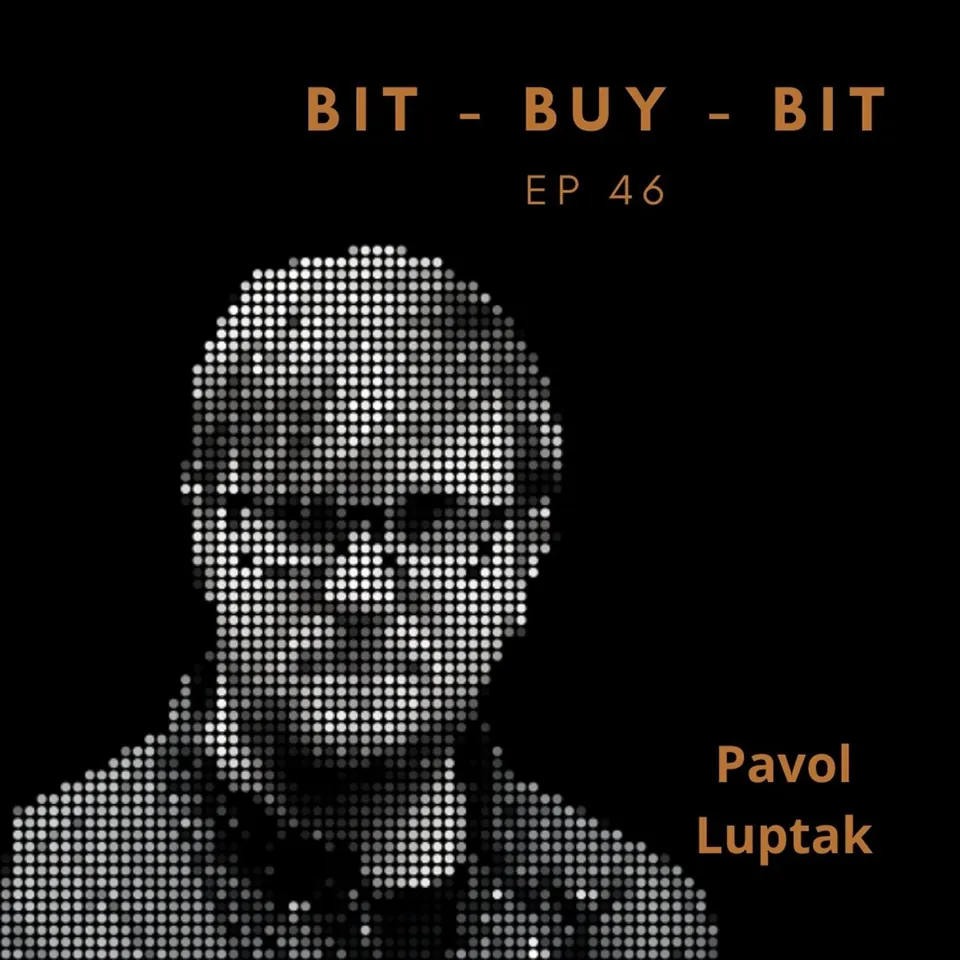
EP46 Bitcoin podcast with Pavol Luptak
Discussed in this episode
Boost this Episode
Send sats directly to the creators. Value for Value.
Plus 1% to Podcast Index, 1% to Boost Bot.
Show Notes
In today's episode I have the immense pleasure of speaking to Pavol Luptak about HCPP20 Digital Totality, Paralelní Polis, and Hacking.
“Pavol Luptak is a cryptoanarchist and voluntaryist focused on technology and society hacking. He started his career as a computer hacker with many prestigious IT security certifications. In 2007 he founded IT security company Nethemba focused on penetration tests & ethical hacking, few years after, he co-founded a bug bounty company Hacktrophy. He is responsible for many public security projects (e.g. cracking of the most used Mifare Classic cards, hacking of public SMS transport/parking tickets, hack of e-Kasa).
As a hacker enthusiast, he co-founded Progressbar hackerspace in Bratislava and Parallel Polis in Prague and Bratislava (hackerspaces in Prague where he is responsible for organizing the international cryptoanarchist conference focused on liberation technologies.
He has started the initiative ‘We do not work for the government’ (https://nepracujemeprestat.sk, https://nepracujemeprostat.cz) grouping of all companies in Slovakia and Czech Republic that have decided not to work for the government and state institutions because of ethical or economic reasons.
In addition to technologies, Pavol loves contemporary art as well. He became a member of the famous Czech contemporary art group Ztohoven which is responsible for many hacktivist contemporary ‘media sculpture’ projects and started with his friend the digital art company Satori.
With the development of Parallel Polis, Pavol decided to achieve his vision – completely opt-out of the system. Thanks to globality and flexibility he decided to give up his permanent residency, switched from bank accounts to crypto-currencies, started to use global health care and mobile phone companies, becoming a global citizen.”
Links and information from our discussion
https://digital-totality.hcpp.cz
https://nakamotoinstitute.org/static/docs/cyphernomicon.txt
https://en.wikipedia.org/wiki/Parallel_Polis
: Vaclav Benda
https://en.wikipedia.org/wiki/Charter_77
https://digital-totality.hcpp.cz
This code gives a 50% discount to the online and meatspace tickets. (bitbuybit)
As always please feel free to reach out and ask me any questions.
Website -https://www.bit-buy-bit.com
Twitter - @BitBuyBitPod
Email - bit-buy-bitpodcast@protonmail.com
Today you can exchange $1 for 9395 Sats (Sale ends soon.)
Thank you Coinfloor for sponsoring the show. If you haven't signed up already then click the link below for the best way to buy Bitcoin. coinfloor.co.uk/BITBUYBIT
Bitcoin is close to becoming worthless.
Now what's the Bitcoin? Bitcoin's like rat poison. The greatest scam in history. Let's get it. Bitcoin will go to fucking zero.
All right, you ungovernable misfits. I'm your host, Max. Everybody knows that Bitcoin is useless, worthless, and doomed to fail. But what if everyone's wrong? What if it's the system that is doomed to fail?
Join me as I speak to some of the brightest people in the space and deliver to the deepest, darkest depths of the Bitcoin rabbit hole. Welcome back to Bit by Fit. Today I speak to Pavel Luktak about HCPP20, digital totality, and paralleling the police.
This year is the 7th Annual Hackers Congress. It looks amazing. There's a lot of sovereignty workshops to learn how to use these tools, as well as HCPPTV, which I'll be involved in and interviewing some of the speakers.
Anybody who's listening to the show now and looks in the show notes, you can see a link there, and you will get 50% discount if you use my code. If you haven't already got any Bitcoin, then I suggest you check out my show sponsors, Coin Floor UK.
Go buy yourself some Bitcoin so you can buy these tickets. Pavel, welcome to Bit by Bit. It's an absolute honour to have you on the show, and for anybody who hasn't heard of you or hasn't seen the project that you guys are doing and that's coming up this weekend, can you please do a little bit of an introduction?
So, this weekend we're going to organise probably the biggest crypto on artistic given. Globally, the name of this even is HCPP-20, which means exactly hackers, Congress, Parionic Police.
And it's basically like our anniversary party, like a birthday party, a seven birthday party because exactly seven years ago we created a unique place in the center of Prague, which is called Parionic Police.
So, maybe I should introduce exactly what is Parionic Police. Parionic Police, but I don't need it in English, it means parallel, and Polish is from Greek, Latin language, and means city, so Parionic Police basically means like a parallel city.
And this original concept was invented by one guy from 1977 or 1978. Maybe I should describe the history of Parionic Police. That would be amazing because, for me, I was contacted by Max Hillibrand and he said, "Look, this is what's going on."
I, you know, honestly, I hadn't really dug in, I didn't know a lot about it, and the further I do dig, the more fascinated I am. So, as much for me as the listeners, I would love to hear the origin and go a little bit deeper into the history.
Oh, cool. So, let's start with the history. In the, like, during the 70s in Czechoslovakia, we used to call this like a period normalization. It was immediately after, like, the invasion of Soviet Union Army in 1968.
The Russian became to be really totalitarian in Czechoslovakia at that time. We call this "spirit normalization", which means that in that time, like a secret agents, government secret agents, we call it Htebe, which is like a Czechoslovakian version of KGB or a German Stelze, so we had something similar.
And they were infiltrated into the whole society, basically. So, the situation, political situation was really bad. Nobody could trust nobody. And thanks to this, it was impossible to change the system, to make the revolution, to make the demonstration, to do anything.
Like, the situation was pretty similar to the situation in North Korea now in Czechoslovakia. And so, at that time, in the end of '70s, maybe '77, '78, there was, like, an underground dissident movement.
And the name of this underground dissident movement was a chart '77 or 'hard past '77. I'm getting, maybe, to send you the link so you can share more information. And this, it was dissident organization.
One of the founders of this organization was Vaclav Havel, who became later first, like, president of free Czechoslovakia in 1989. And another important figure person from this movement, dissident movement, was Vaclav Banda.
And this guy, this guy was a mathematician. So, this guy has really good, like, abstraction. He was able to imagine many things, many other people were not able to do. And this guy, he brought something, what he's called, but I don't need Pauli's Manifesto.
So, I'm going to send a link. So, this Manifesto, this is the Manifesto. And this Manifesto basically declared that we need a need of parallel society. So, despite the fact that we have to leave in a totalitarian system
political regime, we need to build, like, an alternative parallel society. And he declared that any free society should respect, should tolerate existence of parallel society. And he declared the need of free markets, for example,
the need of parallel free markets. He defined the need of parallel culture in that time. It was, like, the underground Czechoslovakia music, for example. He was even thinking about a parallel legal system.
But this was, like, a local project. So, only a few families inside of Prague, they switched, like, into some intellectuals. They switched to this parallel society. So, it was really minor, you think.
And then, nothing special happened. In the beginning of '90s, especially in California, in San Francisco, there was cypherpunk movements, led by people, like, for example, Timothy C. May, who brought the first Krypton artistic Manifesto.
With cypherpunks, there were totally enthusiastic, because, Phil Zimmermann, another cypherpunker, he created the first version of PGP, which was the first implementation of asymmetric communication work, where two people, anyone can communicate with anyone, with anyone in a completely encrypted, end-to-end encrypted way.
And it was, like, a big thing in that time. And Krypton Okist, they realized that it's exactly Krypton technology that may help us a lot in help us to achieve more personal, both personal and economic freedom.
And he brought Krypton artistic Manifesto. He also wrote "Safronomicon", which is another, like, crucial document. Because we are Krypton Okist, we were totally impressed by this document.
And then, seven years ago, it was in Prague, by the way, "Safronpunks", they also predicted the existence of cryptocurrency, like Bitcoin. And it was, like, almost 20 years ago, before Bitcoin was created.
And then, exactly seven years ago, or eight years ago, we revealed this Peralni-Polish Manifesto from 1970 to 1978, from the Czech-Decedent Battle Banda. And we realized that now we have technological tools, we have a technology, crypto technology,
that can help us to achieve parallel society, or to build parallel society, using these crypto technologies. And thanks to crypto technologies, we can make this parallel society global. So despite the fact that we are some kind of minority,
we can be like millions of people looking for freedom, people who want to create parallel society, who want to switch to cryptocurrencies, free markets, for example. And that was the reason that we realized like a strong potential of these ideas, of these thoughts, and we created Peralni-Polish,
which is basically the liberation thing thing. It's a place where we try to promote the idea of free society, of free parallel society. So for us, we love crypto, but our goal is freedom.
And we consider crypto as a liberation tool. So that's a different, because many people, they consider crypto as an investment tool, or some technological tool to achieve something specific.
But for us, we are crypto in our case. So for us, crypto is a liberation tool. And thanks for this liberation tool, we can achieve both personal and economic liberation. That's fascinating to hear the backstory of it.
And like you say, a lot of people do just get into, especially with Bitcoin, people do just get in because they think, "Oh, I can make some money out of this." And they don't really understand what the potential is and what it unlocks.
But like you're saying, without these tools, freedom isn't really possible. And it's exciting for me looking at what's happening this weekend and having these workshops and having all of this stuff available.
Because I think that a lot of people don't realize that these tools are available and that this can actually be a reality. And I wonder what the founders write, you know, saying about in '77, I think you said.
They obviously saw this coming. And how has it played out in comparison to their view? How much further down the line of totalitarian governments are we or are we sort of where they had imagined?
That's exactly what we are trying to reflect at this conference we are organizing. The HCPP Congress, we are organizing this weekend, is focused on digital totality. So because we can see the upcoming digital totality, like globally, especially this process was boosted by like a COVID pandemic.
Because a lot of governments, even in Western countries, established and enforced a lot of privacy, intrusion laws, for example. So basically, even in the Western society, we are losing our privacy very fast.
And that's exactly what we want to show that this is a big problem. And if we are not able to stop this process, at least let's show the people how it's possible to protect themself. Yeah, and show that these tools, how to use these tools.
Because again, I've only been involved with Bitcoin and this kind of stuff for coming up to about three years. And I'm a very non-technical person to start with. And it's been a really steep learning curve for me to learn about coin join, to learn about tool,
to learn about VPNs and how to do the stuff that you guys would see basic, basic, basic. But for me was setting up a node and this kind of stuff. I've had a lot of people help me along the way, which I've been very grateful for. And it seems like what you're doing with the workshops and with the HCPP and all of this
is going to help so many people to be able to use these tools that otherwise they'd be quite put off or scared from even trying to use, I think. Yeah, like for example, this year for the first time, we are going to organize so-called super innovative workshop,
like a digital privacy workshop, that should help people to show how they can significantly improve their digital privacy, for example. And I'm so impressed that we have really great speakers and at least I strongly recommend you to check this digital workshop we are planning to have.
Yeah, I'll be checking them out personally, but anyone who's listening and can get hold of tickets, I very much suggest it because the tools are there, but it's still not always that easy and simple to use them properly.
You know, I've found within Bitcoin a lot of the stuff, you can do it, but it's very easy to make a mistake and very easy to, although you've put a lot of time in to try and work on making sure your privacy is better, just one mistake can cost you everything.
And I think that, like I say, that puts people off because they do worry that they're so scared of making any decision because they think that one can make it all go wrong. Yeah, like I think when we, when we, I'm sorry for this.
That's all right. I need to switch off my phone or no, at least. Okay. Okay. So, so the thing is that.
Especially when you speak coins, the thing is that you don't rely on third parties like banks anymore.
So that's the reason why you are the main responsible person who should invest to, to privacy of your own coins, because there is no third party, like bank, for example. Which may provide, which may provide some guarantees.
So, yeah. Yeah. And it's hard to, it's hard to use it privately. Like I said, it's a steep learning curve to try and work on, you know, making sure that you, you're trying to avoid these chain surveillance companies and the people who want to spy on you.
And it's not an easy thing at the moment, but I've been focusing quite a lot with this podcast on trying to help people with the privacy. I've done, I've got samurai wallet on, on Monday.
I've done a few episodes on coin join and, and that kind of stuff. But yeah, it's, it's all the other stuff that you're discussing like PGP and things like that. That I just haven't learned how to use yet and then I'm very keen to because it scares the hell out of me.
What's going on? And like you said, with the pandemic, I'm in London, which as, as countries go supposedly a pretty free one, but things are sliding to a pretty scary place very quickly. Yeah, the situation in Prague is, for example, now, like pretty bad, like the Czech Republic became like red zone for many neighbor countries.
So, for example, now, if I want to visit any neighbor countries, for example, Slovakia, I have to make the COVID test. So, but still, we believe that if you follow like some security medical devices, like we can, we can still like a meat.
But at the same time, we, we decided, we decided to go full online. So, everybody who does not feel like safe, for example, or who wants to protect him sort of herself can check who actually be Congress online.
Yeah, and so you're saying it's the, it's the seventh annual Congress this year. How have you seen things change over the years from, you know, from first launch, you're saying it's coming up to the birthday, like, what, what has that journey been like for you and the others who have created this with you?
So, we are trying to be more professional every year, but especially be easier. It's really complicated because there is a lot of uncertainty, a lot of risk. So, for example, just yesterday, we finally decided if the state in the physical place, or we will switch completely
online, we decided for both scenarios at once. So, the thing is that now we have to face like really a lot of uncertainty. And in the beginning, like the first one was just a pun, you know, like it was like non coordinated event.
We organized like really, really fast. The second year was more professional, the third year, even more professional. And since beginning, we are, we have been trying to be international crypto-noxistic conference.
So, the only presentation we accept, they have to be in English language, for example. And we have a really good connection with the crypto liberation communities.
This is probably very necessary to mention that we basically built a network of European crypto liberation communities, especially people from Germany, for example, Smackler and Frank Brown.
They've helped us, they helped us a lot. Now we, this year we also did a good connection with the organizer of blockchain hotel conference and on-chain conference. So, so now we are, we are in touch when we are connected with the many other Bitcoin conferences, and we try to promote our events basically together.
So, so I'd like to say that is like this Congress is a collaborative event or job of really many different people.
And thanks, maybe like just the core team is probably maybe four or five people, but we had maybe 30 or 40 volunteers and another 100 people who are still pretty active helping us with promotion.
And like program speakers and everything. So, quite a lot of people organize now, HTTP, HTTP Congress. And I would like to say that we are like a parliament policy, non-profit, non-commercial organization.
And also these HTTP Congress, we are trying to be non-profit, non-government, non-commercial event. So, it means we completely, we completely depend on volunteers in our situation.
And, and so, so for example, we, any commercial presentation or the vendor or product bias presentation are prohibited because the Congress is about the thoughts about the ideas, you know, and we try to keep this every year basically.
And the difference, difference is that like historically we were like a physical conference. So, so, so the thing, so we didn't have any online tells, only maybe just one or two. Like Lyn will be, for example, or National Lab or, you know, these top speakers who could not come physically.
But this this year's is different because of pandemic. So, for example, now, I would say that 50% of all speakers will be online. So, remote talks basically. And is there anything particular that you're focusing on this year more than others, you know, with the changes that's going on?
Obviously, you're, you're talking about digital totality and is there any sort of things that you're seeing that are changing faster? Like I'm seeing on your front page, the old guard is building a prison of bits and bytes, drones, cameras, databases and hostile AI.
Is there anything say in that list or outside of that list that is developing at a speed that concerns you more than the rest? Yeah. So, like, okay, we try to, we try to follow our HTTP manifesto.
It took us some time to create this manifesto you have just read. And so we basically notify, inform all our speakers to prepare their presentation to follow these these your HTTP manifesto.
And what is unique compared to the previous years? So firstly, we are launching this digital workshop, which is completely new things.
Last year, I think we have like four tracks of presentation. These are only three tracks of presentation because of pandemic, but still, I would say that we will have the same amount of speakers like last year or two years ago.
We, this year we are focusing on live streaming on like we completely, we completely change our website and each show and everything.
So, like, so we did a lot of technical work, technical world, most people probably would not, not this, but so, so, technologically, and also because of this live streaming for the first time in our history.
We, we want to scale up conference to like hundreds, maybe thousands of potential visitors. So we'll see. And that's the difference. So basically from the, the local or still, it's, it's international, but still it's, it was pretty small, like 600 people.
Now, we would like to, to be more open, like we would like to be like global online conference. And this year, we will see if we, if you're able to do that or not.
And in terms of interest with the conference and interest in the way that you're thinking and the goals that you are trying to achieve. Have you noticed a difference from when first starting this to now at how receptive people are to these ideas and, and are you noticing
that there's any change with the average person and how they're viewing things, are they still blissfully unaware the average person or are they starting to slowly wake up to the fact that maybe some of their freedoms are being taken from them and maybe they don't have the privacy
or privacy that they should do? Are you noticing any difference? Yeah, I think, I think like a digital privacy or security awareness is definitely improving over time.
And the thing is also that in the beginning, for example, when we opened a parent policy in Prague, like we were the first bitcon coffee in the world, and many, a lot of people, they were really confused.
They were not willing to use cryptocurrencies because it was like a super complicated and something completely new. And what I can say that after the period of seven years, we can say that now it's like a new normal, it's a default.
Like everybody's, everybody uses crypto and nobody, nobody asks why or what kind of wallet should I use or I don't know. So it's like a new normal and so, so bitcon is nothing new now.
It's like a belt technology and so, for example, we can perceive Bitcoin or crypto currencies now like a widely used tool and thanks to these, most people know how to use it.
And thanks to these, we can focus more on schedule, for example, speakers and we don't need to care about these usability things, you know.
Yeah, I've noticed that things are getting easier and easier and that a lot of the wallets and like the usability of this stuff and to do it well and to do it privately has got, even just in the short time I've been involved, much, much better.
It's incredible how quickly these things are moving. We can, we can see like a special improvement as put in, for example, I think wallets, now because Bitcoin line, it was quite difficult one two years ago.
And now thanks to wallets like, for example, phoenix, it's pretty easy to use it for most people. So, for example, last year, we started to accept lighting payments and also these year we, we accept lighting
payments and a lot of people they switch to lightning because of Bitcoin fees and they start to use it to use them. So, and do you use something like BTC pay? Yeah, we use like BTC pay server for last three years, probably now.
And so it's the best Bitcoin, open street Bitcoin gateway with no competition in these days. So, yeah. And the thing is that, that we, we are trying to build all technology we use.
We try to use like open source technology, if it is possible. And we try to do everything by ourselves, you know, to technical, to technical recovery because we, we don't have extra money to pay like a third party's companies.
We still have to, but every year, like a more, we use more open source technologies or we switch to open source technologies. Yeah, that's brilliant. And you personally, you know, what was your background and getting into this stuff? Have you always been involved in open source technology? Have you always been fascinated by computers?
How did, how did it come about that you went on to this path? More than 20 years ago, I finished computer science at a Czech Technical University in Prague. And I, I created my first IT security company.
So my technological background is computer security. We are like the ethical hackers. So that's, so that's the source of my income now.
And now at this moment I have to like IT security companies. And thanks to these regular income, I can focus to like a charity or a nonprofit activities and a political organization of each Congress is one of these like a charity or like activity.
Because I consider it to be, to be really important. And that's my background. So I am the technological guy, basically. And maybe what can be, what is quite interesting in my life is that probably four years ago,
I started my personal crypto liberation process, which means that I decided to, to renounce my permit residency in Europe. I became the Panamanian resident.
This month, I'm just becoming the resident of Paraguay. I'm still citizen of Slovakia. I, two, three years ago, I stopped using bank accounts and I switched completely to cryptocurrencies.
I became like a perpetual traveler. I follow, I follow the, the, the flakatory, flakatory basically means that you have, you have your citizenship of one country. You have a permit residency in the second country. You have the bank account, this is not my situation, but you have the bank account in the third country.
You have the company in the fourth country. You have your customers in the fifth country. And you finally leave in the sixth country and each country you are trying to choose in the most, the most opportunistic way, you know, the best, the best for you.
So, so basically what happened to me, like last four years, I, I became like global citizen. I, I, I decentralized, like, as a, as a physical person, basically.
And also writing the book, I would like to, I would like to publish this book until the end of this year, and the book, the name of the book is opt out of the system. That's the title. And subtitle is my crypto liberation story, how it is possible to achieve both personal and economic freedom by being global and flexible.
And that's my topic now. It's a fascinating topic. I said to you just before we jumped on and started recording, I'd watched a talk you've done on this topic.
And it's, it's pretty amazing that this stuff is possible. And it sort of seems to me like it's, it's like a regulatory arbitrage and sort of basically using the system to your advantage and being able to have a lot more freedom and sort of live
in a way that works best for you. And it makes a lot of sense. But it's something that, you know, again, personally, it seems like it's a, there's a lot of work that goes into this, having things over in Panama.
And I imagine that you have to be outside of a country for a fair amount of time, because I know there was a case here recently, I won't say the name of the person. There was a family friend of ours who got heavily, heavily hit with tax, because he was trying to live within the
regulation that was something where he could be, I think, in the Seychelles for a certain amount of time and only came back to London for a short amount of time.
And they hit him really hard with his tax and found a way to get him. And I wonder, is there a play, is this book going to be a play by play and help people understand really how to do this and not be screwed over by their government or by taxes?
Yeah, exactly. So the thing is, it's really necessary to distinguish between, for example, permanent residency and tax residency, because tax residency, there is like an international law, according which tax residency depends on the amount of time you spend each in the given country.
So if you leave somewhere more than 183 days, like half of the year, these countries becoming your tax residency.
And not only that, but there is also something what is called a center of your interest. So despite the fact that you can leave, for example, in Seychelles or in Panama, more than half of the year, if you have, for example, your apartment, your house, or your children who visit school in London, for example,
the British government can still hit you and just say, it doesn't matter that you don't leave here, you don't have residency here, you don't have tax residency here, but because the UK is your center of your interest, you have an obligation to pay taxes here.
And of course, there are a lot of, like, orgarounds, a lot of solution, how to cope with the situation. So for example, if you have like any properties in the UK, you can sell these properties, for example, to a Panamanian company.
So you have to become technically homeless person who owns more people, for example, and also you have to be able to prove that you have the, like, a national idea of some other country.
But the thing is, what I want to say is that this liberation process is not so expensive, like many people think, it's not a question of money, it's not citizenship, we are not talking about the citizenship, which is pretty expensive.
If we are talking about permanent residency or tax residency, it's not, it's not expensive, not so so expensive, you just need, you just need at least in the beginning to invest quite a lot of time and energy to set up everything you need.
But then, but then what I can tell you, like, life is more easy. Like, for example, now I am the Panamanian tourist in Europe, for example, for the last three years.
So, because I'm citizen of Europe, you know, I can live in any European country with no permit, as much as I want. And because I have no residence in any country, I have no duties to any countries.
And I need to pay like a social health insurance or any related taxes. So the thing is that I think that we are in situation that we should definitely use all legal possibilities to make your life free as much as possible.
Yeah, I completely agree. And there was another interesting point that you made in the talk, which was about homeschooling. And I think I'm right in saying that if you have set things up in the way that you have, then you cannot be forced to send your children to a certain school.
And may it be of your choice. Yeah, exactly. Like these decentralization or these status of perpetual traveler can help a lot of people who want to homeschool their children.
If you are, for example, Panamanian tourist in the UK or in any European country, and also your children are Panamanians residents, the local government cannot force them to go to the school.
And also it means that you don't get the penalty or basically don't end up in jail because you don't put your children to the school. So, so I think that this may be really beneficial for people who want to homeschool their children.
For example, even in Panama, you have to register your children to the local Panamanian schooling system. But the thing is, it works in such way that it's quite easy.
You don't have to pay any like online training course to your child. With the proof, with the receipt that you paid it, you take this receipt, you bring this receipt to the Panamanian Ministry of Education.
It gives you like a stamp that Panamanian governments approves that your child is basically educated by Panamanian government. So, so then you can travel with your children and if someone in the UK, for example, or any European countries has any problem with your education of your children.
You just show them this paper official statement from the Panamanian government. And that should be enough, you know. So, so, so I think that like these legislation hacking or these. Yeah, these I would call it like a legislation hacking may help a lot of people who are looking for freedom.
Definitely, it's something I'm going to be looking into. It sounds like the smartest way to go because of all of these things. Like, if you do have children and you have a certain idea of how you want them to be brought up and if things slide too much one way in the country that you're in and your kids are being forced to
learn what you don't believe is right for them to learn, it could be pretty scary and you don't technically have any rights over what your children do in this country. Like, if you were to take them out that you say you would be arrested, which is pretty worrying.
Also, probably if you want to homeschool your children, you should check which countries legally offer this possibility. For example, in Germany, like homeschooling is like a totally prohibited, but you can easily homeschool your children in the Czech Republic.
So everything depends on the local legislation and if you're willing to move, if you're willing to travel to some other countries, you can solve a lot of problems with your freedom, personal and economic freedom.
Yeah, fascinating. Well, I look forward to this book and when it's released, I have to have you back on and go a little bit deeper into all of this because it's absolutely fascinating. I'll be diving deep down this rabbit hole now.
Outside of that, is there anything else that you're working on, life hacks or anything outside of cryptocurrency and the IT security or anything that you're passionate about particularly?
We did the recent things we did in our company and it was like a huge scandal. It's like it's a global scandal, the biggest security incident in Slovakia, which happened last year, last week. In our company, we revealed a serious critical vulnerability
in the national slavagational center of medical information. So we basically got the access to medical records or personal information of almost 400,000 people in Slovakia who were tested for COVID.
So basically, for the demonstration purposes, we downloaded like 130,000 records and this is like a big thing because it shows that the slavag government is basically not able to care about the privacy of almost like a 10% of slavag citizens, which is really crazy.
So this is the last project we did last week. So I'm still involved in this security scandal, security incidents. Of course, it was completely ethical. So we follow the responsible vulnerability disclosure.
And so I'm still doing something in this IT security field. But at this time, I'm fully focused on an organization of HTTP Congress.
And after HTTP Congress, my plan is to move to Paraguay to pick up my Paraguayan national ID. The cool thing about Paraguay now is that thanks to COVID pandemic, you can ask for the Paraguayan permanent residency in a completely, completely remotely.
So you don't need to visit this country at all. So during my first visit of Paraguay, I immediately will pick up my national ID, which is pretty funny.
Yeah, the first day in the new country and I'll be a lucky resident. Yeah, so that's what I want to do, like probably in one month. And I have to finish my book until the end of the year.
And I'm not doing any like long term plans, just for a few months. Well, I imagine you're you're very busy obviously organizing this conference. And I imagine there's a huge amount of work that goes into it. Like you said, we definitely that's going on with COVID and all this stuff. But it is really exciting.
I'm really looking forward to tuning in. I've put the whole weekend aside. So I'll be jumping in and out of the HCPP TV, doing a couple of interviews. And when I'm not actually recording, I'm just going to be trying to learn from all of this stuff because it seems
you know, I've been very much involved in Bitcoin and learning all I can with that. But a lot of this stuff is very new to me. And yeah, I can't wait to get involved. So where should people look to get involved and find out about this stuff?
Let's go straight on to the website areas or is there any other places where they need to look? Yeah, I think we are pretty active at social networks, including the mainstream ones like Twitter, Instagram, Facebook, all these networks.
Also, for like a crypto anarchist who are out of the social networks, if they bought the online ticket or if they bought like a normal physical ticket, they can be a part of the internal mailing list.
And we use like a mailing list to send important notifications to about all Congress about all interesting Congress related things.
Also at HCPP.CZ, you can subscribe to our newsletter. So there are a lot of ways where we are active and where you can find more information about the upcoming Congress, especially during the Congress.
So we're really super active at our social networks. Okay, brilliant. And if you, after this, send me some links for that, I'll put all of that in the show notes as well.
And also, so the plan is we are going to launch hdb.tv, which will be like a public channel of selectively chosen like presentation, we are going to plan to stream.
And if you want to have like, if you want to watch all presentations, or you want to choose which presentation you want to watch, you can buy these online online hdb ticket.
Important information, I think when someone is listening to these podcasts, I think you can get this special voucher code, I guess. So, Max was telling me about this, he said he was going to send something for me so again I can link it in the show notes.
So it's the listeners get a discount and it was linked bit by bit and then a link afterwards but yeah I'll put it in the show notes once I've got it. And it's like a 50% it's quite significant. Oh wow.
Well, amazing. Well yeah, I urge anyone who's listening to this now, this is going to go live just before it starts because it's going to take me a day just to get it all set up and do the audio and release it.
But yeah, I urge anyone who's listening to this and concerned about the way the future's going and concerned about their privacy and wanting there to be freedom for now and going on into the future, definitely jump on and take advantage of this discount.
Yeah, so, so we're looking forward to you and to your listeners. So, see you at HTTP 20. So I hope I believe like you like it. So we have like a regular visitors. I hope we will also have like a regular listeners.
Excellent. All right. Well, yeah, it's been an absolute pleasure speaking to you. I've been fascinated to learn about the history and and also to hear about the other things that you've been working on.
And I'm looking forward to this book coming out and looking forward to this weekend. But is there anything else that we haven't covered that you wanted to then let me know.
Yeah, so it is still possible to come to Prague if you want. It's quite likely that if you want to come back to the UK, for example, or like any other country, you have to make the copy test.
But the borders of Czech Republic, actually, if you're European, is open for you. So you can still physically come to Prague and visit like a HCP Congress, like a physically. And if not, live stream and will be available.
And we also especially appreciate any feedback. So, because this year, we will use completely new technology for basically everything, including streaming.
We would appreciate any feedback that can make us better next year. Okay, perfect. And anything else you wanted to cover? That's all. Thanks a lot for listening to this podcast and see you physically or virtually at HCP Congress.
I look forward to it. Thanks very much for joining me and I'll speak to you soon. Okay, thank you. Thank you for your invitation. Thanks. Bye bye.
Machine transcript; expect the odd mishearing. Click a passage to play from there.



