
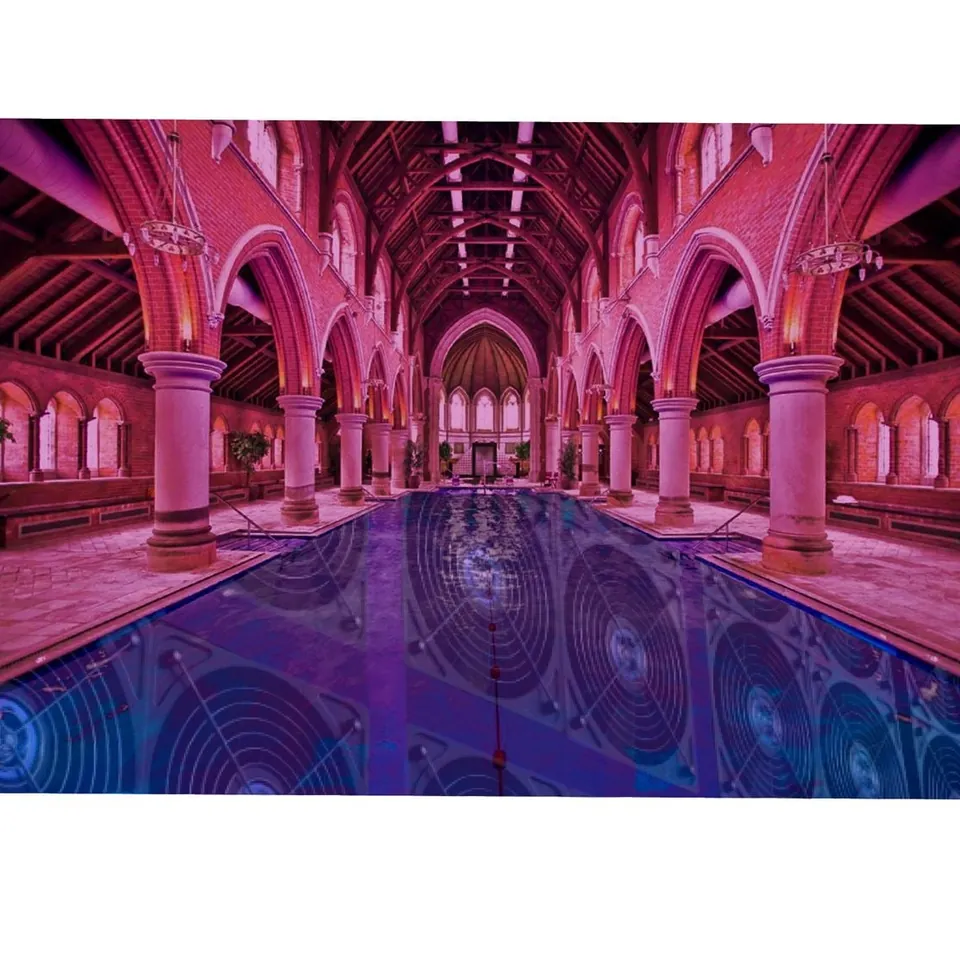
Mining Bitcoin and swimming in sats with @techengineer21
Discussed in this episode
Boost this Episode
Send sats directly to the creators. Value for Value.
Plus 1% to Podcast Index, 1% to Boost Bot.
Show Notes
Mining Bitcoin and swimming in sats
I had the pleasure of speaking to Tech Engineer a bitcoin mining pleb who has built a fully functional swimming pool heating system using bitcoin miners, immersion tanks and automation to thermostatically control everything. Tech engineers focus is on privacy, security and the ability to double spend energy to heat while mining Bitcoin. In this episode we discus Tech’s rabbit hole journey and why mining was so interesting for him, we also discussed the need for decentralising the network and helping smaller miners compete by using the heat produced by mining for something productive. I really enjoyed speaking to Tech and I hope you enjoy listening. I have decided to also add transcripts at the bottom of the show notes as some people have told me this would be useful. Transcripts might not be perfect but they should be pretty good.
If you aren’t already following @techengineer21 I suggest you do it now.
twitter - @techengineer21
twitter - link to pinned video https://twitter.com/techengineer21/status/1523023198287130624?s=20&t=Ct2G5BawqRw4Nc6LcRUaBQ
As always please feel free to reach out and ask me any questions.
twitter - @MaxBitbuybit
twitter - @bitbuybitpod
Website - https://ungovernablemisfits.com
Today you can exchange $1 for 4760 Sats (Sale ends soon.)
Thank you Foundation Devices for sponsoring the show.
Use code BITBUYBIT at check out for $10 off your purchase
00:01.28
maxbuybit1
So hey there mate can you hear me I can hear you loud and clear welcome to the show.
00:03.55
TechEngineer
I am max I can hear you can you hear me.
00:17.49
TechEngineer
Thank you for having me I'd be here.
00:25.00
maxbuybit1
Yeah, well, it's an absolute pleasure to have you On. Um I try and find always people who are doing interesting things and not just the usual podcast circuit and I came across your profile and saw your video you'd done um on this immersion tank and. Pool heating and is something I discussed ages ago with a mate of mine a mate like me with no technical ability and it was just like a thing we talked about but we're too dumb to actually do it. We're like fuck. Someone's got to do this. This is something that's got to happen just makes so much sense and when I saw yours I was like fuck I just need to speak to you and.
01:25.59
TechEngineer
And.
01:44.12
maxbuybit1
You know, find a little bit more out because this is the future. It's fucking cool.
01:51.23
TechEngineer
So right on man. Yeah, let's let's talk about it.
01:59.56
maxbuybit1
So Yeah I mean um, less so we can do rabbit hole stuff later On. Let's just dive straight in with with what you've been doing Obviously I've seen the video but. For anyone who hasn't can you sort of describe the project and and and what made you decide to do it.
02:33.79
TechEngineer
Yeah, absolutely so let me start with a little background. Um back in 2017 was when I kind of went down the bitcoin rabbit hole. It was November of None I heard on the radio bitcoin cross $10000 and I was like. What is going on with this. Um and I was I was instantly intrigued and wanted to look into it more and immediately was drawn to the technology aspect of it and the mining aspect of it. Um. So I started looking into mining and at that time. Ah the miners went up in cost dramatically kind of similar to what happened in 20202021 and I tried to put to order a miner and it. It got delayed and that eventually just never shipped. Um, but there it so it was ah an it was an expensive endeavor for me to get into but I was still very interested. But at the time I knew like I was living in Colorado and I wanted to somehow use the heat that was. Being put off of these devices because I knew they put just put out a ton of heat. So that time I was thinking well maybe I'll just put in my basement and ducked something up to my upstairs long story short. It never ended up up working out just because the miner never showed up and then um. Price kind of dumped and then we went into a bear market and the profitability equation changed and I just decided that I just couldn't I didn't get into it at that time but that kind of built in the back of my mind like.
05:54.36
maxbuybit1
Here.
06:16.35
TechEngineer
Want to mine. It's important for the bitcoin ecosystem for mining to be very decentralized but we need some sort of other factor that helps it be more productive to like a home miner so hard using the heat was in my mind. So fast forward to 2021? Um I finally decided you know what I need to just take the plunge here and start building a heater out of a minor so I don't know if you saw my original video but it was a a minor that I put inside of a box. And then aducted into my hvac system my heater my the heater in my house and then I put in some dampers and thermostatically controlled the airflow from the heater from the from the miner into my heater. So I basically he did my entire house all winter using using this system. So I'm I'm guessing you haven't seen that one I think you saw my ah.
08:08.54
maxbuybit1
Amazing. I haven't no um I haven't seen that one I have seen it done before but I haven't seen that specific one and I'm right in thinking it's fucking cold in Colorado. Been been there skiing before and fraze my boocks off. So I assume you need a lot of heat when you're living in there.
08:55.51
TechEngineer
So yeah, and actually I don't live in Colorado anymore I mean I'm in Nevada now. So it's a much warmer climate but um, still need some heat in the winter. So I mean that was that was my None big.
09:04.50
maxbuybit1
Okay.
09:30.39
TechEngineer
Step into this whole arena here was when I built that that system and that was kind of before I had joined bitcoin Twitter even and realized everything that was going on. So um, so once I had ah finished that system.
09:40.60
maxbuybit1
Here here.
10:07.57
TechEngineer
And I had proved out that I can actually heat my house all winter with this system. Um the the next level for me was immersion. So the original system was just taking the air and redirecting it.
10:30.76
maxbuybit1
Here.
10:43.77
TechEngineer
Um, but you can only do so much with redirecting air. You can't move it very far. You can't do anything other than really heating air with air. But I knew in the back of my head that ah like liquid cooling like I have I build um my own computers. And the cpu are liquid cooled so that was already in my mind like that's a thing I just didn't know that an immersion existed yet. So once I so once I kind of got on to bitcoin Twitter saw some other people do an immersion once I realized that was a thing I was like.
11:24.72
maxbuybit1
Here. Okay.
11:51.81
TechEngineer
Oh my God I gotta try this out because I.
11:58.56
maxbuybit1
What what was what was that like finding bitcoin Twitter for the None time because I know for me, it was an absolute lifesaver like it just changed the game.
12:20.30
TechEngineer
And it was ah it was ah a game changer for me as well. I mean I have always kind of been doing these projects and I mean my name is my name is tech engineer because I love technology I Love engineering I'm mean the home automation I'm always doing Diy engineering projects but I'm just kind of doing it.
13:02.78
maxbuybit1
A.
13:00.51
TechEngineer
Solo on my own That's how I've always done it and I've always wanted to kind of like branch out and like start documenting these things like because I know that what I'm doing has interest to other people and so finally I was like you know I just got to do this and I made a video about it posted on Youtube and then then it just kind of. Ble up on Twitter and went around in in through bitcoin Twitter and I realized all these people have a big interest in this and I was like oh my god these are these are my fucking people right here like so it was ah it was a game changer for me then I I mean I I love it like it's.
13:51.94
maxbuybit1
Are.
14:16.22
maxbuybit1
Yeah, that's so fucking cool and and like you said is it is so useful for so many people because you know there are people like me who like us a really great idea like it's It's a logical thing that you use this heat. But then we're too dumb to actually do it and then so you have this this stuff documented and.
14:14.17
TechEngineer
Awesome.
14:50.77
TechEngineer
So.
14:55.34
maxbuybit1
It's so important to help decentralize this thing because otherwise what's going to happen if you don't have people like you and acono alchemists and people out there who are pushing and documenting you just have everyone putting their minors in huge warehouses with shit shows like compass or things like that. And then it's really so much easier to attack and um, yeah, that's why I'm just I'm so excited when I see this kind of innovation and and people tinkering and and building and um, this is this is the stuff that like really moves this space. Forward. This is what it's all about.
15:58.53
TechEngineer
So yeah, absolutely and that is one of my biggest drivers behind what I'm doing is to further decentralize mining because I see the trend happening of centralization of mining whether it be into. Big mining companies or like you were saying like hosted solutions and that just that just introduces a whole host of of problems. Um, when you have centralization and I actually have an article coming out in the next few days that I talk a bit more about it. Um.
16:41.14
maxbuybit1
Here.
17:12.20
TechEngineer
And why I think that's kind of bad I don't I don't I don't one hundred percent think that like big bitcoin minds are bad but we need both. We need we need. We need to decentralize as much as we can um, but…
Bitcoin is close to becoming worthless.
Let's go!
Now, what's the Bitcoin? Bitcoin's like rat poison. Yeah. Oh. The greatest scam in history. Let's get it. Bitcoin will go to fucking zero.
Yeah.
Yeah.
All right, you ungovernable misfits. I'm your host, Max. Everybody knows that Bitcoin is useless, worthless, and doomed to fail. But what if everyone's wrong? What if it's the system that is doomed to fail?
Join me as I speak to some of the brightest people in the space, and deliver to the deepest, darkest depths of the Bitcoin rabbit hole.
Today's episode is with tech engineer. He's minor for heat on Twitter. And I saw a video he'd posted recently where he's built a immersion tank with minors in it that heats a swimming pool.
I thought this was really cool, because as we try and decentralize this network, I'd really like to see more plebs mining at home, and to make this cost effective, the best thing to do is to use the heat.
There's an endless amount of use cases for this heat, and people are getting really creative. I love to see people collaborating, and it's rating on these designs. Tech Engineer's video is very detailed.
It's pinned at the top of his page. It's @techengineer21, and I'll link that in the show notes. I want to thank him for putting this work out, and I suggest to anyone who is listening to this, and maybe considering mining at home, then check this video out, and also reach out to me if you want pointing
in the right direction, and you want any more info. Before we start, I want to thank everyone who has been streaming Sats and sending messages on the podcasting 2.0 app. I really do appreciate it.
I'm really loving Fountain now that I can actually send some messages back as well. That's a really cool feature. I'd also like to thank everyone who has been giving feedback, rating the show, and helping it in the rankings.
If you haven't checked out the website yet, go to ungovernablemisfits.com for all the rest of the content, articles, video, art, prints, and much more. I'd also like to thank my sponsors.
Let's start with Foundation devices. With all the crazy bullshit that's going on in the financial system right now, and the parts of Bitcoin that touch it, it's more important than ever to have control of your keys.
Do not leave them on an exchange. Do not tie them up in some fucking stupid yield generating scam. Hold them, and hold them properly. I really like what Foundation are doing because they make it really easy.
Any fuckwork can do this, and they can do it very securely. With QR scanning, PSBT, and a really fucking beautiful design. You can use Foundation devices passport with that own app, that's the most simple way, or you can connect this to any of your favorite wallets.
I really do suggest this to my family and friends, and I wouldn't have them as a sponsor if I didn't believe in the team and the product. If you haven't already seen it, I suggest you go to foundation devices.com.
If you decide straight away to buy one, then you can use the code bit by bit, and you will get $10 off. Or if you're not 100% sure, and you have some questions, and you just wanna run them past me or the team, you can do my DMs that always open, and you can always contact the team as well.
Go to foundation devices.com, and start taking your security seriously today. And finally, we have fast Bitcoins. Fast Bitcoins are an exchange based in the Isle of Man. They have a really amazing team.
Danny Brewster is leading that team. He's been on this show a couple of times, and he is a real die-hard proper Bitcoiner. Now, everyone knows on this show that I try and push people away from KYC services, so why the fuck have I got one as a sponsor?
Well, I have these guys as a sponsor because I know that the majority of people are gonna use exchanges, especially when we have times like this, and people want to be stacking a dip and stacking hard.
I'll always advise that you go without KYC, but if you are gonna do it, I want people to use the best team available, and I really believe these guys are. They take security very seriously.
They push to get you to get your sats off exchange. They do not want to custody your sats. Fast Bitcoins was also the first exchange in the world to integrate Lightning, and they are always a few steps ahead of the rest.
Again, if you want to contact me or the team, you want to talk about trade-offs, you can do, my DMs are open, and I'll always be open and honest. I really hope you enjoy the show. Check out FastBitcoins.com.
Hey there, mate, can you hear me? Hey, Max, I can hear you. Can you hear me? I can hear you loud and clear. Welcome to the show. Thank you for having me, so I'd be here. Yeah, well, it's an absolute pleasure to have you on.
I try and find always people who are doing interesting things and not just the usual podcast circuit, and I came across your profile and saw your video you'd done on this immersion tank and pool heating, and it's something I discussed ages ago with a mate of mine, a mate like me with no technical ability,
and it was just like a thing we talked about, but we're too dumb to actually do it, and we're like, fuck, someone's got to do this. This is something that's got to happen. Just makes so much sense, and when I saw yours, I was like, fuck, I just need to speak to you and find it a little bit more out,
because this is the future, it's fucking cool. Right on, man, yeah, let's talk about it. So, yeah, I mean, we can do rabbit hole stuff later on. Let's just dive straight in with what you've been doing.
Obviously, I've seen the video, but for anyone who hasn't, can you sort of describe the project and what made you decide to do it? - Yeah, absolutely. So, let me start with a little background.
Back in 2017 was when I kind of went down the Bitcoin rabbit hole. It was November of 2017. I heard on the radio, Bitcoin crossed $10,000, and I was like, what is going on with this? And I was instantly intrigued and wanted to look into it more and immediately was drawn to the technology aspect of it
and the mining aspect of it. So, I started looking into mining, and at that time, the miners went up in cost dramatically, kind of similar to what happened in 2020-2021. And I tried to put to order a miner, and it got delayed and that eventually just never shipped.
It was an expensive endeavor for me to get into, but I was still very interested. But at the time, I knew like I was living in Colorado, and I wanted to somehow use the heat that was being put off of these devices because I knew they just put out a ton of heat.
So, at that time, I was thinking, well, maybe I'll just put in my basement and ducked something up to my upstairs. Long story short, it never ended up working out just because the miner never showed up and then the price kind of dumped and then we went into a bear market and the profitability equation changed.
And I just decided that I just couldn't, I didn't get into it at that time. But that kind of built in the back of my mind, like I want a mine, it's important for the Bitcoin ecosystem for mining to be very decentralized, but we need some sort of other factor that helps it be more productive to like a home miner.
So, using the heat was in my mind. So, fast forward to 2021, I finally decided, you know what, I need to just take the plunge here and start building a heater out of a miner. So, I don't know if you saw my original video, but it was a miner that I put inside of a box and then a duct did into my HVAC system,
my heater, the heater in my house and then I put in some dampers and thermostatically controlled the airflow from the heater, from the miner into my heater. So, I basically heated my entire house all winter.
- Amazing. - Using this system. So, I'm guessing you haven't seen that one. I think you saw my-- - I haven't, no. I haven't seen that one. I have seen it done before, but I haven't seen that specific one.
And I'm right in thinking it's fucking cold in Colorado. I've been there skiing before and fries my bollocks off. So, I assume you need a lot of heat when you live in there. - Yeah, and actually I don't live in Colorado anymore.
I'm in Nevada now, so it's a much warmer climate, but I still need some heat in the winter. So, I mean, that was my first big step into this whole arena here was when I built that system.
And that was kind of before I had joined Bitcoin, Twitter, even then realized everything that was going on. So, once I had finished that system and I had proved out that I can actually heat my house all winter with this system, the next level for me was immersion.
So, the original system was just taking the air and redirecting it, but you can only do so much with redirecting air. You can't move it very far. You can't do anything other than really heating air with air, but I knew in the back of my head that liquid cooling, I built my own computers and the CPUs are liquid cooled.
So, that was already in my mind, like that's a thing. I just didn't know that immersion existed yet. So, once I kind of got onto Bitcoin, Twitter, saw some other people doing immersion, once I realized that was a thing, I was like, oh my God, I gotta try this out.
What was that like finding Bitcoin, Twitter, for the first time? Because I know for me, it was an absolute lifesaver. Like it just changed the game. - It was a game changer for me as well.
I mean, I have always kind of been doing these projects. And I mean, my name is Tech Engineer because I love technology, I love engineering. I'm in the home automation, I'm always doing DIY engineering projects, but I'm just kind of doing it solo on my own.
That's all I've always done it. And I've always wanted to kind of like branch out and like start documenting these things. Because I know that what I'm doing has interest to other people.
And so finally, I was like, you know, I just gotta do this. And I made a video about it, posted on YouTube. And then it just kind of blew up on Twitter and went around and threw Bitcoin, Twitter.
And I realized all these people will have a big interest in this. And I was like, oh my God, these are my fucking people right here. So it was a game changer for me. And I mean, I love it.
Like it's awesome. - Yeah, that's so fucking cool. And like you said, it is so useful for so many people because, you know, there are people like me who like, ah, it's a really great idea.
Like it's a logical thing that you use this heat, but then we're too dumb to actually do it. And then so you have this stuff documented and it's so important to help decentralize this thing.
'Cause otherwise, what's gonna happen if you don't have people like you and a condo alchemist and people out there who are pushing and documenting, you just have everyone putting their miners in huge warehouses with shit shows like Compass or things like that.
And then it's really so much easier to attack. That's why I'm just, I'm so excited when I see this kind of innovation and people tinkering and building. And this is the stuff that like really moves this space forward.
This is what it's all about. - Yeah, absolutely. And that is one of my biggest drivers behind what I'm doing is to further decentralize mining. Because I see the trend happening of centralization of mining, whether it be into big mining companies or like you were saying, like hosted solutions.
And that just introduces a whole host of problems when you have centralization. And I actually have an article coming out in the next few days that I talk a bit more about it than why I think that's kind of bad.
I don't, I don't, I don't 100% think that like big Bitcoin mines are bad, but we need both. We need to decentralize as much as we can. But what worries me is what happened to me in 2017 and 2018 where I was interested in mining, but then I realized that the profitability equation just wasn't there once we went into a bear market.
But I realized that if we can reuse the heat and if somebody's like heating their pool or their house and they're also making Bitcoin, now we have a different equation altogether. - Mm-hmm.
And the other, the other interesting thing for me when it comes to the stuff like this, even if it's break even or only very, very slightly profitable for people, the fact that they're actually mining and getting no K-wacy Sats rather than just going onto an exchange and buying on there and giving all their information,
I think that's incredibly important to push this space forward in the right direction. So the more this gets normalized, the better for the whole space, the better for the individual, like the whole thing about this for me anyway is like this is freedom money and fuck you money.
Not K-wacy cut money and go and give all your details away and everyone's tracked and traced. That's not the future I wanna see here. So what you're doing here allows people to actually have access to this and allows this to be a reality for people where it makes financial sense as well.
- Yeah, absolutely. And I mean, I see more of the hardcore Bitcoiners, they're willing to mine at an even or even a little bit of a loss just because of the no K-wacy option. But to get into the next layer of people that aren't that into it, it needs to be either more profitable or simpler
or say they're just buying a water heater that happens to make Bitcoin on the side. That's where I wanna see it going in 10 years is like these are just appliances that the average person is buying whether or whether or not they even know that Bitcoin is being mined.
I mean, that's what I think we need to get to eventually is that it's just integrated into every part of our system because I mean, if this is gonna be the base layer of the future monetary system, it's gotta be secure.
- Yeah, absolutely. And so obviously you're a very like technically-minded guy. What was it like for you coming into this from the tech side and being like, this is interesting, this is cool.
And then looking into the money, what was that experience like? Are you already interested in Austrian economics and that side of things? Or was it quite a mind-blowing thing to be like, oh shit, this is the money we've been using and this is the problems.
- So I was at first very interested in money go up. I saw 10,000, I was kind of an investor in the stock market and I was like, what is going on here? And I had actually heard about Bitcoin mining in I think around 2012, 2013.
And I looked into it for five minutes and was like, yeah, I don't know what this is, like never got into it. Obviously kicking myself for it. But anyway, in 2017, 2018, it was like, the technology was mind-blowing to me.
I have always, so I'm a network engineer by trade. I've been building computers and networks for over 20 years. So the technology side was really, really intriguing to me. Cryptography has always interested me.
I've been a certified ethical hacker in the past, so I kind of have a deeper understanding of cryptography and security and all these things are just beautifully enveloped in Bitcoin. So it was technology kind of money go up in 2017, 2018 for me.
2020 and 2021, it was really looking at Bitcoin from the aspect of the world needs a new financial system because our current one is completely broken. And I mean, it even, it got just got worse in 2020, 2021 in my opinion, and now.
So it was in the last two years that I was like, the world really needs Bitcoin now. It's not just a cool technology. It's a socio-economic revolution that the world needs. - Yeah, I couldn't agree more.
I think we're fucked without it. - Yeah. - So yeah, it's interesting to see somebody come in from the tech side. I mean, almost everyone that I know or spoken to is always number go up, almost always number go up.
I mean, a few people say like, I mean, I'm in it for the tech, especially in the bear markets, but you know, if truth be told, it's always for the money and it is nice to know that we've got this thing on our side and it's nice to know that there's like a possibility for a future where we aren't tied to these psychopaths
who are doing the crazy shit they're doing at the moment and for the less technical people, it takes a long time to like have some trust in this thing. But I imagine for you, especially with the background, you've just told me it's like, you're almost made for this.
You know, you're made to understand this with the background that you have. So when you were first learning, were there any like red flags or anything where you thought, oh, you know, this is a problem or that's a problem, like were there concerns?
- And then you're cutting out a little bit. Hey, sorry Max, you cut out a little bit. It's like I missed a bit of that question. - I lost you. - Can you hear me? (upbeat music) - Hey, mate, yeah, I heard that.
Can you hear me? - Yeah, so I can hear you, can you hear me? - Yeah, excellent. And we're recording fucking every time I have some stupid issue with this, so apologies. - Don't worry. - So I'm not sure where we exactly cut off there.
I was probably waffling about something, but I can't remember where we'd got to. - I can't remember either, to be honest. - Doesn't matter, doesn't matter. So yeah, tell me a little bit more about, 'cause obviously you said you'd started without immersion, and now obviously you're working with immersion.
I know from previous conversations with John, who you know, and a few others who were saying that it also makes it a little bit more performant and potentially because it's more stable, can be good for the miners as well.
Is that right? And if so, do you sort of see most of the space eventually going this route with immersion? - Yeah, so once I had completed my original heater, and then I realized that immersion existed, I was like, this is definitely the way, because once you have the heat and liquid form, you can do a lot more with it.
You can heat water heaters, you can heat pools, you can still heat air. You can use a water to air heat exchanger and just switch it back into air. So you can have one power plant of a minor heater creating heat into an oil, and then use that heat for many different applications.
So I knew it was more modular to reuse the heat in that way. So I wanted to try it out and build it. And in terms of the longevity of the miners being in oil, I have heard that as well, and it makes sense to me that an oil would be healthier for the chips to be in.
The oil itself is like 1,000 times more or less conducive to electricity than air. So that helps, and then it just keeps it encapsulated away from oxygen. So I think in general, it makes sense that it would be better for it.
I haven't done any long-term testing myself yet. Obviously, I built that tank only, but I guess about five months ago now, four or five months ago now. So, but yeah, that's kind of the reasoning for transitioning into immersion is the capability of where you can move that heat to.
You can go longer distance. There's many more things you can do at once. Once it's in liquid form. - You know, the other thing that you were talking about was like this being, this sort of being, if I lost you again, are you there?
- Hey, you just cut out again, can you hear me? - Yeah, I just saw that it cut out. - Okay. - I can hear you, sorry, I'm almost certain this is my issue on my end, so I do apologize, but hopefully we can work with it.
- Yeah, so I was, you were saying about this potentially being used in boilers and other products where people don't even necessarily have to know that they're mining Bitcoin. Do you think there's any drawbacks or any reason like in terms of efficiency or anything like that, why someone would use
like a traditional comfy boiler or something over one of these? 'Cause obviously a lot of those are gas rather than running with electric. - Yeah, so in terms of efficiency, all electricity turns into a heat, 100% of the time.
No matter what you're using the electricity for, it always transitions 100% into heat. So if you're comparing directly to, say, an electric pool heater that is just using resistive, like a resistive coil, you're just pushing electricity through a coil and it heats up.
Comparing that to running the NASIC and then pulling the heat off of that, you're gonna be near 100% efficiency other than some losses of like the tank or the piping, but all that can be minimized with insulation and whatnot.
So comparing an ASIC heater to an electric heater, it's near 100% efficiency, theoretically. And for the most part, in practice. Once it's well designed and once you have a system that's completed and set up, the efficiency is gonna be very high.
Comparing to that to gas is another story because then you're running into like the cost of gas, heating versus electric heating. And often in a lot of jurisdictions, gas is cheaper than electricity.
So from a pure cost perspective, gas could directly still be cheaper. But if you're just drop replacing say an electric water heater for an ASIC electric water or pool heater, it's gonna cost the same amount to run it.
You're just gonna be making Bitcoin on top of that. So it might end up paying for itself. But so I mean, in my case, I have a gas heater in my house. I switched to electric. Technically, I'm spending more fiat dollars on the electric cost relative to gas, but I also made up enough Bitcoin to cover that.
- Yeah, that makes sense. And I guess the other thing is like getting people's minds to shift. I mean, it's hard for now. Like you were saying, oh, you know, you come in in 2017 and you're looking at like mining profitability and you're thinking, oh, well, you know, how many dollars am I gonna get?
And you're looking at it through that lens, whereas once someone's been in Bitcoin for long enough and understands this, at the end of the day, all they care about is how many sats can I get?
I don't care what the dollar value is today, tomorrow, a year, two years. It matters to me long term how many sats I'm getting. And so maybe that affects the way that people think about this in the future.
- Yeah, absolutely. And I mean, that goes back to, you know, more of a hardcore Bitcoiner versus a random person doesn't care. I mean, somebody that is just wanting to stack sats and that's important to them.
And that's, I mean, that's important to me for sure. But to get this into a broader market, it's gotta be more profitable just in general. And I mean, even for the Bitcoin miners that are very into just stacking sats, right now it's hard.
I mean, the profitability equation has changed. You know, you got the difficulty of the hash rate at all time highs. Meanwhile, Bitcoin's price is down. So when you're looking at that equation, it's hard to be like, "Yeah, something that I wanna get into mining "because it looks unprofitable "if you're looking at the equation."
But mining for heat can change that equation. - Yeah, dramatically. And so what are people who you're working with and friends and family and people around you who aren't on Bitcoin Twitter?
Like, what are they saying if they're coming around yours and they're seeing this thing? And they're like, "What the fuck are you doing here?" Like, "What is this crazy invention that you've got?"
Or, "Are you starting to orange pill people around you?" - Yeah, when my friends and family see it, I mean, it depends on who it is. You know, I mean, some of my friends that are more technical kind of already understand Bitcoin a little bit.
They're like, "Wow, that's incredible "that you can take a computer and harvest the heat." And like, most people had no idea that that's even possible. I mean, I didn't even know that was possible really a year ago either.
So it's like, it is like jaw-dropping even for myself to look at it and look at this tank and be like, "Wait, there's a computer or putting off heat. "I'm heating my pool with a computer."
It's just like, and I'm like swimming in Bitcoin at this point, literally. - Swimming in sales. - Yeah, exactly. It's so mind-blowing to me. I mean, it's mind-blowing to my friends and family that I tell about it.
And I mean, yeah, to some extent, I'm, it's helping to orange pill people because it at least opens up to conversation. And they're like, "Wow, this is so interesting. "What is this thing?"
And I mean, people are telling me like, "Oh, I should patent it "because it just looks like this crazy contraption." And it's a mix of like, all in interest and maybe a little crazy, I don't know.
(laughing) Yeah, well, it certainly looks cool. It's just, I don't know, when you see something working, when you see something like this, it's so much more interesting than just like sitting down with someone and saying, "Yes, there's this thing called Bitcoin "and it's really good money because of X, Y, and Z."
And like, you know, the normal sort of orange pill that people do, I've always found like showing someone either just like sending them some Bitcoin on a wallet or like showing a node running and telling them how it works.
And that kind of stuff like tends to peak more interest. But then this is that on steroids because it's like, "Whoa, what the fuck? "You're hitting your pool? "That's mental. "No one reads anything like that in the newspapers "or hears anything about this kind of stuff in normy world."
So it's a real slap in the face. And I think it opens the door really nicely to explain, "Well, yeah, it's not just some stock or something you buy "and the price goes up or down. "Like, this is a system and it's incredible "for a million reasons we could list."
And it just opens the door. And I think like whatever type of person it is, if they take the time, they'll find a little area that they're interested in, you know, be it privacy, the economic side or the engineering side or whatever it is.
There's always something for someone. Yeah, it's, you know, that's the great thing about Bitcoin Twitter. Everyone can help each other and they always have someone to speak to and go further and further down the rabbit hole with these things.
Yeah, absolutely. And I mean, speaking of the normy and their reaction to it, I mean, it's a pretty easy sell potentially. Eventually, if these heaters are more integrated, be like, "Hey, do you like free heat?
"Do you like free energy? "I mean, do you like free water heaters? "Do you like free pool heaters? "Do you like a pool heater that pays for itself?" I mean, nobody can say no to that, right?
So it's potentially, it's a potential easy in for not only understanding Bitcoin, but also integrating mining and further decentralizing mining even to people that don't care about Bitcoin.
And so is that something that you're trying to push now? I think you're on this mining panel with John very soon. Is this something where you're trying to spread the word and make this a reality?
I guess you could say it's kind of the angle that I'm working within the Bitcoin ecosystem. It's an angle that I don't see pursued a lot. And it's an angle that I think is important for how I see the long-term trend of Bitcoin mining and the importance of decentralizing it.
So I don't know if I'd say I'm like pushing it, but I mean, it's important to me and it's interesting to me. And I love what I'm building. I love the projects I work on. I love engineering.
So it's just, it's fun to me. And I'm helping out the greater Bitcoin ecosystem and it's fun to be a part of this. Yeah, definitely. And getting to find other people who are iterating on this as well, people who are taking ideas and then running with them.
And there's so many different things that you can do with heat, so many useful things. And so it's amazing. Like once you start looking at what people are doing and the crazy ideas they've got, like I've seen people using them in greenhouses.
I've heard people talking about all sorts of heating, not just for homes, but also for like hot tubs and obviously you're doing the pool and all sorts of things. And like, I don't know where it ends.
Like I'm sure this could be used for types of farming and other stuff. So everyone needs heat or almost everyone needs heat. Yeah, there's a ton of applications. Yeah, I've seen greenhouses.
And yeah, bouncing ideas off of other people is amazing. I mean, Bitcoin Twitter is almost kind of like a giant collective brain where I can work on a micro part of the problem, build something somebody takes what I've done and iterate upon that and solve another piece of the problem.
And I mean, for example, I built my tank which other people had already done. I kind of saw what other people did and I kind of designed something around what I needed and customized it for myself.
But I kind of iterated on what other people had done. The next step that I haven't released or talked about too much yet or I'm still in progress is the more of the automation side of like, so with a pool heater, you want to increase the heat based on the temperature of the pool, right?
So I mean, eventually you want to be able to set a set temperature and just make it simple. And then the system just handles the background of heating or not heating. So I've talked to other people about this and somebody else ran with that idea and he's a very talented developer and he was able to build an integration
between the firmware and a microcontroller essentially. And now I've been able to implement that into my system. So I have a thermostatically controlled environment now. So I can set a temperature and then the miners can actually scale up and scale down based on heat demand.
- That's really fucking cool. So what are they doing? You dropping the power of these machines to then drop the heat basically. You're like under clocking or overclocking depending on the demand, is that right?
- Exactly, that's exactly right. - And is that brains that's doing that or is that a separate bit of software or firmware or whatever that you're using? - Yeah, so I'm using brains OS plus as the firmware and they have an API and that's what the integration was, is reaching out to.
So the integration between it's actually home assistant, which is a home automation platform, an open source home automation platform. That talks to the API of brains OS and now we can get the temperature of the chips and we can get the hash rate and we can get a bunch of information from the miner to home assistant
and we can also tell brains OS to tell the miner to scale up or scale down. And we can do that based on any event now. So I then set up a microcontroller with sensors that sense the input from the pool.
So I now know the temperature of the pool and based on that I can have an automation that then says scale up the the miner if we need more heat, which increases the wattage and therefore increases the output of the heat and heats faster.
Ideally where I see it going is you would size the number of miners appropriately to the heat destination. So say you have a 50,000 gallon pool, it's gonna be different than a 1000 gallon pool, you're gonna need more miners, you're gonna need more heat and a bigger pool obviously or in a bigger house.
So you size it to the right size, ideally you want the miner running at an efficient wattage, pretty much all the time. But if say it was cold one day, you could overclock quite a bit and get more heat or you could underclock on say a hotter day.
So it gives the ability to scale more. So you can scale up or scale down more using these automated integrations. - Are there any concerns with overclocking and adjusting these miners on a consistent basis in terms of the longevity with these machines?
Like is it possible that that could be detrimental to the lifespan of them rather than just having them running at a consistent speed or whatever you would call that? - Yeah, that's a good question.
And I mean, I think in general overclocking of any chip is going to tend to decrease its lifespan. But I mean, immersion helps a lot with that because you're keeping the temperatures down and I mean, that's the biggest problem with overclocking is the temperature, the temperatures go higher.
And that's the killer of chips is temperature. So, but that being the case, I, that's kind of why I had said like, ideally you'd keep it running at actually an efficient level or a standard level as kind of your base load and then just occasionally kind of overclock as needed.
And so I don't, in that kind of use case, I don't think it's bad. And from what I've seen working with brains OS and the dynamic power scaling, it doesn't seem like it has any negative effect to be scaling up and scaling down on a somewhat regular basis.
But that is a good question to actually look at the longterm impacts of that, which I haven't quite done at this point. I mean, I've been running it for, you know, five months. So it's a few months, but not years, right?
- That's so key. Like having this thermostatically controlled and all automated, it just, you know, it's a whole new level, isn't it? Because you're not gonna have people say like, oh yeah, I'll put one of these in and then they're tweaking and fucking around with it all the time, like, you know, people wanna put this in.
They're pool to be at the right temperature, the things to run, nothing to break. They just want it to work, you know, when the sort of non-tingers start wanting these in their homes because it makes financial sense.
This is the kind of stuff which just completely changes the game. - Right, and the other issue is it's gotta be maintainable. I mean, you don't wanna have situations where it overheats and, you know, now we have other problems to deal with with overheating that can be a security,
I mean, it can be kind of dangerous if it overheats too much and it have fires and lots of different things. So there needs to be control mechanisms in place that, I mean, even just an emergency shutdown when overheating, that requires some sort of brain to kind of control things.
And I mean, the miners from where you usually have that kind of built in to some extent, but I just don't, it doesn't make me comfortable to just release like just a system without some sort of finish to it to any person that isn't building it themselves.
You know, so I've had people already like, hey, I wanna do this on my phone, I wanna do this on my hot tub. And I'm just not quite there yet, but that's kind of the goal to be able to refine the system to make it more accessible to more people that are interested in doing this.
- Yeah, I think there'll be a lot of people who do want to. The other thing I've wondered about for ages, I don't know whether it's possible or not, but could you do it with a sauna, do you think?
Like, I know that's a dry heat, but would it be possible to do a hot tub and a sauna if someone wanted both? - I don't see why not, I don't know a ton of saunas, but I think that would just essentially be changing the heat from the oil-based heat into air via a water to air heat exchanger and blowing it into a room to heat it up a lot.
And then I think saunas are usually, I mean, they usually have some humidity put in or something, but I think it's certainly doable, yeah. - So interesting, it's like once your brain starts ticking with like these sort of ideas, you can't, oh, I can't help thinking into the future and just thinking, oh, have I lost you again?
You there? - Hey, you just cut out for a second. Are you kidding me again? - Yeah, yeah, it seems to just cut out for a second or two. But I was just saying, I can't help my mind from running wild and thinking, where the fuck are we gonna be in like five years with this stuff?
There's so many applications for heat. It just, yeah, I can't help thinking that it's just gonna be five years, 10 years from now, everywhere. - I know, there's so many applications, it's unreal.
I mean, I had a guy in Canada contact me. He's like, yeah, this place way up here, it's like zero degrees all year long and they have almost free power. Like what can we do with this? I mean, it's like the amount of areas that are cold and need heat.
I mean, that's a huge market. - Yeah, absolutely massive. What was their power so low? Is that like a dam or like hydro or something like that? - Yeah, it was some like small mining town, like old school mining town that had some old contract with like a hydro power plant or something like that.
So it was like nearly zero cost power and they're already using like electric heat. So I mean, they've probably just used thousands of kilowatt hours of just electric heat already. So that's just an easy, easy drop replace.
I mean, it's not easy, it's but it makes sense financially. It's like, that's an easy equation. - Yeah, definitely. And then for people who have cheap power, the other thing I was thinking before this call is, especially now when you have like a drop in price and like the S9s and some of the older hardware,
those prices drop to practically zero. Presumably for, you know, somebody who has zero or near zero power, it's actually going to be better than going and buying electric heaters because you can get these things for practically three.
And if you're heating a big space, you can get a bunch of these things, plug them in, have them running. And, you know, I'm sure if you get enough of these people just want to get rid once they become unprofitable.
- Yeah, exactly. And that's kind of always been in the back of my mind too, is that we can definitely use older generation miners. We can keep them in service longer essentially by using them as heat sources now.
Maybe you'd want to get, you know, one or two generations old, if you're installing a new heater system just so that you wouldn't have to upgrade them for several years, right? Obviously the Bitcoin miners, the generations, they go quickly.
Although, I see that trending towards slowing down. The quickness of how fast the older generation becomes obsolete. I think we're reaching kind of the top of a exponential curve or a log root in the curve of improvements in terms of hash rate and efficiency.
That makes sense. - Yeah, yeah. And do you think also you're going to have more players stepping in? I know there's been talk of it, you know, I sort of believe it when I say it, but do you think that people making this hardware, there'll be some decentralization there and more optionality for people coming in
that there's not just like two big players? - Yeah, so I know Intel is getting into the space as well as Jack Dorsey, and I don't know a ton about them, but from what I understand, they're attempting to make a more like modular approach to the ASICS.
So instead of buying like an ant miner, you could just buy a thousand chips that you put directly into say a heater. So now we can just, we don't need to like build the tank around the form factor of an S19.
It can just be more integrated directly into like an actual heater. They're just built right in. - Yeah, that makes a lot of sense. And like space wise, that would be much better presumably.
- Yeah, so I mean, that's kind of where I see it going longer term is it'll be very integrated. - Yeah, because the other thing is like, if you're getting the hardware as it's built now, when you're then putting it into immersion, you're presumably like taking these fans off or bypassing them somehow because they're not needed.
And so there's a load of stuff that's built around it that's actually not necessary. So it seems quite wasteful or not as efficient as it could be. So that would make sense if they do it that way.
- Yeah, absolutely. We're kind of repurposing a product for something it wasn't really intended for. But if we can redesign it from the ground up as a heater, then it's a different equation altogether.
But I mean, that's a whole nother scale that's probably five, 10 years out, I would think. So in the shorter term, it's interesting to see where we can go with repurposing these things for heat applications.
So you obviously spend loads of time thinking about Bitcoin and mining and everything in the space. Like, do you have any thoughts on where we're going? Like, if you're looking out into the future, you've said, obviously, you know, the money's fucked.
You think that this system is very beautifully designed and it obviously has grabbed your attention hard 'cause most people wouldn't be building what you're building unless they really cared.
But if you let your mind wander, where do you think we're gonna be in 10 years? What do you think's gonna be happening in this space? - Yeah, that's a good question. I hope for Bitcoin standard, eventually.
I think it needs to happen. I believe that. I mean, obviously I don't know how or when it's gonna happen or if there's gonna be some other intervention that slows it down or I don't know.
But it needs to happen. So, I mean, and that's why I want to get kind of the mining infrastructure prepared because when it happens, it's just gonna happen and nobody's gonna be ready for it.
So, I mean, coming from as a network engineer, a network security engineer, like you want to build a system that's secure, ready to go. So when the load comes, it's just ready to go and it's safe and secure.
So for Bitcoin, the way I see it overall is like, it needs to be highly decentralized so that there are not attack vectors of like, like say a political organization, getting a bunch of big mining operations to like work together or shut down or do a 51% attack.
There's a lot of things that can happen. But if it's more integrated into like heaters all around the world that nobody has control over, now it's more secure from my mind. - So that's a concern for you is like this centralization of the mining.
I think that's reasonable. I mean, you only have to look through history to see that like these people will do pretty much anything to protect their interests. And these big miners are sitting ducks basically and if they're threatened or co-opted or blackmailed or whatever happens to them, they will fold.
You know, a lot of these guys are going to be very fiat minded. Not everyone is here to say, right, fuck, we need to do this to literally like to save the world. A lot of people will be in it just to say, well, I want my profits and I'm going to be too scared if I'm threatened and I will comply.
And that's my fear with it, with a lot of these bigger miners. So I'm totally with you there is that the more we can decentralize things, the better. And, you know, I don't like this move where there's so much power going to a specific country.
It would be nice. Yeah, it'd be nice to see it spread out a little bit because it was like, you know, everyone was worried about China having all the ash power and more majority of it. And then it's gone, a lot of it's gone over to America and it's like, well, if they're losing reserve currency status and they're concerned about Bitcoin,
you don't really know what they could potentially do. Yeah, and I mean, I can see in the future, I mean, if Bitcoin becomes a standard, like there could be a war on Bitcoin mining control.
Like you control the blockchain, you control kind of the world. If that's the monetary standard, like think of how impactful that is. And yeah, I posed the question of decentralization, actually in a mining panel at a Bitcoin conference recently to one of the big miners.
And I just kind of threw it out there that like, this is my concern that I see that I want to see mining more decentralized. And I did like his answer. He kind of said, you know, we need both.
We need small operations. We need large operations and the large operations can scale with the growth of the asset. And he also said that it is important to him to decentralize. And they are decentralized from the perspective of having mines in multiple different countries and different continents in different power,
utility jurisdictions. And that's a good thing. I mean, having one big miner that has mines in four different continents, that's somewhat decentralized. But still, if, you know, in 10 years, when, you know, if a whole, if the most powerful government in the world at the time says, you know what, miner, I want you to,
you're going to shut down or we're going to nuke you. Like that, that's the potential threat in the future. But if we have a million or 10 million heaters all over the world, it's a different threat.
- Yeah, it's definitely a potential issue. The other thing that I've been saying to people is with all the crazy stuff that's going on in the world and so many people who are struggling to pay bills and so many small businesses that have been forced to close with all the COVID nonsense and everything else that's going on in the world,
there's a lot of people who are pretty desperate and barely afford to keep the lights on. And I've been saying, wouldn't it make sense for some of these smaller businesses? Like a small garage or someone who's barely surviving?
You can write off the cost of your energy and so effectively you can do like sort of pirate mining where you might need heat in your garage or your business, small business. And so if people are getting these old S9s or stuff, the hardware that's basically cost nothing and they can write off the cost of their power anyway,
then suddenly these people actually become competitive because these huge mining operations get access to cheap money, they have access to capital, they have lots of options on like power contracts and generally they can drive their costs much lower because of economies of scale.
But when you have these smaller guys who are saying, well, I'm getting fucked from every angle, I can write off the cost of the power anyway, so it's zero and I can get this old hardware for practically zero.
Like it suddenly starts to become an absolute no brainer and there are millions and millions and millions of businesses like that around the world who could benefit from it. Do you have any thoughts on that kind of stuff and how we could maybe make it a bit more accessible for more normal people, you know?
So they don't have the headache of worrying about setting it up and understanding that this is actually potentially, could save them some money. - Yeah, absolutely I do. And I don't know if you saw a recent post I did about my Tesla solar grid plus Powerwall and how I'm using that to my advantage.
But basically the concept is dynamic power scaling to work around time of service agreements with power companies. So here in Nevada, the highest power consumption and usage is between 1 p.m. and 7 p.m.
when everybody is running their air conditioning. So the power grid is at its peak need at that point. So what they do is incentivize, there's an optional payment plan that you can opt into as a homeowner to basically during that 1 to 7 p.m. period, the price like quadruples, but then the rest of the entire year
of the price is half price. So I opted into this power plan and I get half price energy all the time, except for this one time. And now all we gotta do is use some automation and I actually use my Tesla Powerwalls, which are the batteries and I can actually, I can actually sell power back to the grid
at a much higher rate and reduce my consumption during the peak time. And what you're doing is essentially filling in the values of power demand for the energy jurisdiction. That makes a lot of sense.
- So for example, I'm actually selling power back between one and 7 p.m. for like 22 cents a kilowatt hour. It's 28 cents a kilowatt hour. And then the rest of the time I'm using power at like six cents a kilowatt hour.
And that's my jurisdiction, but in general, power jurisdictions have a problem of the peak demand is only a short period of time, but they have to build their energy grid to meet the peak demand.
So the rest of the time they just have empty space of unused demand. So I want to try to integrate further into that. And basically miners can turn off and on quickly. And I mean, Riot released a video recently about how they're doing it in their big minds.
They're essentially powering down when the Texas power grid needs more power. So integrating with the power companies will be good in general for the overall robustness of the power grid, but also have the benefit of decreasing costs for the Bitcoin mining
because they can incentivize it in different ways. - Yeah, exactly. 'Cause you can over produce and there's always going to be demand, which presumably then might incentivize them to create more power as well, because they know that there's always someone who's going to be that buyer of last resort,
which is going to make everything run a bit smoother. - Right. - It's mind blowing stuff. (laughs) It's absolutely mind blowing. So obviously mining's your thing, but outside of the mining stuff, is there anything else that you're particularly looking at within Bitcoin at the moment, playing around with lightning?
Do you mess around with anything like that? You enter your privacy stuff or are you just solely focused on mining at the moment? - I am into everything. I just don't have time for everything.
So I would say, so I've been focusing on these mining for heat projects, but I do run my own full Bitcoin node. I'm playing around with lightning. Privacy is very important to me. Security is very important to me.
I have a lot to add into the space in terms of network security. So as a network engineer, I'm able to build my home network in a way that is more like an enterprise network with security in mind, different VLANs.
There's a lot you can do to really secure things. And then you can do things like use VPNs and make your Bitcoin node anonymous and run an over tour. So I'm doing all those things. I don't have enough time in the day to explore as much as I would like, but that's the other aspect that I want to explore more
is kind of the security side of Bitcoin and Bitcoin mining. - Yeah, well, I really look forward to seeing what you come up with there. That's gonna be more and more important for people who are mining at home and are putting more of their net worth into this.
And privacy is something that we really focus on with this show because if shit hits the fan and people know what you're doing and there's a load of have-nots and people who can't feed themselves, you do not want everyone to know where you are and what you've got.
- Yeah, absolutely. Privacy is a big concern to me and especially with how the world has gone in the last year to two years and privacy is so important now, even more than before. - Absolutely.
Well, look, that's probably a good place to wrap things up. I don't want to take too much of your time. You've got some awesome stuff you're building, but I've really enjoyed chatting to you and so pleased to see that you're pushing this space forward and making me some incredible stuff and I'm sure loads of people will find it useful
and as and when you start working on this privacy stuff and the home security stuff, I'd love to hear more loads of people benefit from that. So yeah, I just want to say thanks for coming on and everything you're doing really, really do appreciate it.
- Sounds good. It's been a pleasure and good to talk to you. Thanks, Max. - All right, mate, I'll speak soon. - All right, have a good one. - Thank you to everyone for listening to the show and I really hope this inspires you to at least consider mining at home, at least consider finding a way to mine at a business
or anywhere you can get cheap power and use this heat. If you enjoy the show and you want to help support, you don't have to do that with Sats. I would really appreciate if anyone would give feedback on the show, on any of the podcasting apps.
It really does help with the rankings and bringing new listeners that would otherwise get caught in audible shit, shit-coinery, trading, lapping, and everything else that goes on with YouTube and a lot of the crypto shelf factories.
The other thing I would really appreciate is if you would check out ungovernable misfits.com, we have a load of articles, audio, videos, documentaries, much, much more on there. And if anyone just has feedback, I'd really appreciate it.
Me and Mr. Crown have been working very hard on it and we want to make it a home for the ungovernables. I'd appreciate the feedback, good or bad, and thanks again for listening.
Machine transcript; expect the odd mishearing. Click a passage to play from there.



